
Solana's Sharp Drop: Causes Behind the Fall and Future Prospects for Investors
- Solana's 30% price drop in late 2025 contrasts with strong on-chain metrics like 400ms finality and $35.9B DEX volume, but declining user engagement and rising NVT ratios signaled overvaluation. - Macroeconomic factors including high interest rates and institutional caution reduced speculative demand, with ETF inflows favoring staking products over direct price support. - Whale accumulation and RWA growth (up 350% YoY) suggest strategic buying during dips, though active address recovery and NVT normaliza
Solana’s 2025 Price Decline: Unpacking the Contradictions
In late 2025, Solana (SOL) experienced a sharp 30% price drop, leaving investors puzzled. Despite strong on-chain activity and significant institutional investment, the token’s value tumbled rapidly. This article explores the complex relationship between blockchain data and broader economic trends that contributed to this downturn, while also considering what the future may hold for Solana’s ecosystem.
On-Chain Data: Strengths Masking Weaknesses
Throughout the price slide, Solana’s technical performance remained impressive. The network consistently delivered transaction finality in just 400 milliseconds, with transaction fees typically under $0.001. Over the previous year, Solana maintained uninterrupted uptime and even reached a record daily decentralized exchange (DEX) trading volume of $35.9 billion in the fourth quarter of 2025, highlighting its efficiency as a high-capacity blockchain.
However, these positive figures concealed a troubling trend: user participation was falling. The number of daily active addresses dropped dramatically from 7–9 million at the start of 2025 to just 3–4 million by midyear, and this lower level persisted. This decline in user activity signaled fading speculative interest, which was further reflected in shrinking total value locked (TVL) and reduced DEX volumes as liquidity providers withdrew.

Another warning sign was the sharp rise in the Network Value to Transaction (NVT) ratio, which compares market capitalization to daily transaction volume. This spike suggested that Solana’s market value was outpacing its actual blockchain usage, prompting caution among institutional investors. Even with 19 straight days of inflows into Solana ETFs totaling $476 million, the price struggled to stay above $140, indicating a disconnect between new capital and overall market sentiment.
Macroeconomic Forces: Institutional Uncertainty and Market Headwinds
Global economic factors, particularly the Federal Reserve’s monetary policy, played a significant role in shifting investment patterns. Persistently high interest rates led traders to reduce their exposure to volatile assets like Solana, favoring safer investments instead. This risk-averse environment further pressured SOL’s price.
Institutional involvement added another layer of complexity. By late November, Solana ETFs had attracted $618.59 million in net inflows, but much of this capital was directed into staking products such as Bitwise’s BSOL. These products lock up tokens to generate yield, making them unavailable for trading and limiting their ability to support prices during sell-offs.
Large Holders: Signs of Optimism Amid Uncertainty
Despite the challenging environment, activity from major investors provided some hope. Large holders and institutions increased their SOL holdings during price dips, with notable improvements in long-term wallet outflows during October and November 2025. One prominent investor even opened a leveraged long position, aiming for a $400 price target. The introduction of yield-focused ETFs and continued accumulation by whales suggest that strategic buyers still see potential in Solana, especially during market corrections.
Looking Ahead: What Should Investors Watch?
Solana’s future will depend on its ability to balance technical innovation with broader economic realities. The network’s capacity to support $13 billion in tokenized real-world assets as of September 2025—a 350% increase from the previous year—demonstrates its growing appeal for institutional applications. However, reigniting user growth will be essential to restore speculative momentum.
- Active Address Recovery: A return to higher daily active address counts would indicate renewed grassroots interest.
- NVT Ratio Improvement: A decrease in the NVT ratio could signal a healthier relationship between market value and actual blockchain usage.
In the near term, Solana’s price may continue to fluctuate within a range as macroeconomic challenges persist. Nevertheless, the combination of whale accumulation, ETF inflows, and real-world asset innovation could set the stage for a breakout if market conditions improve.
Summary
Solana’s late 2025 downturn resulted from a mix of stagnant on-chain activity, challenging economic conditions, and cautious institutional behavior. While the network’s technical foundation remains strong, its long-term prospects hinge on reviving user engagement and ensuring that valuation metrics reflect real utility. For investors, staying patient and focusing on these key trends may unlock future opportunities as the market works through its current cycle.
Disclaimer: The content of this article solely reflects the author's opinion and does not represent the platform in any capacity. This article is not intended to serve as a reference for making investment decisions.
You may also like
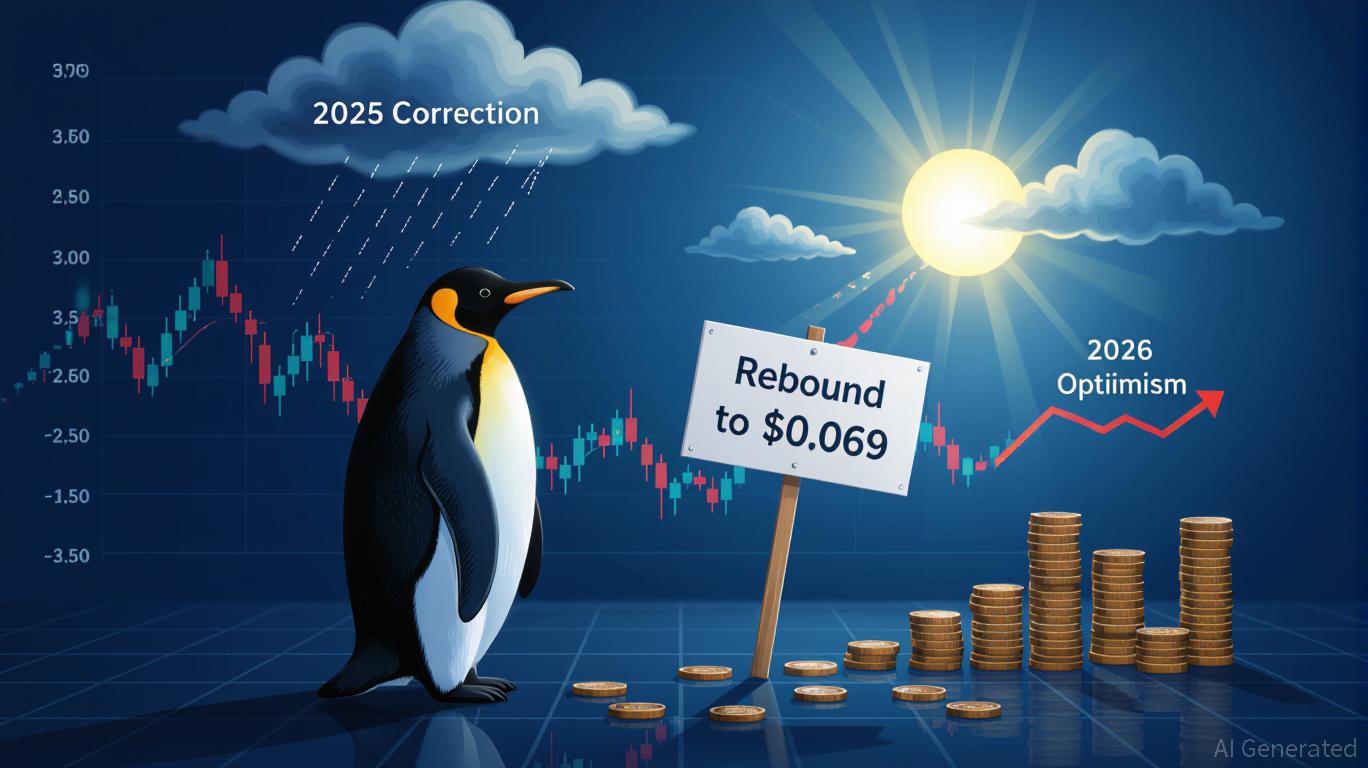
PENGU Price Forecast for 2026: Managing Fluctuations and Momentum from Key Catalysts After the 2025 Market Adjustment
- 2025 crypto market correction reshaped altcoin dynamics as Bitcoin/Ethereum declined amid macroeconomic uncertainty and regulatory pressures. - Pudgy Penguins (PENGU) saw sharp volatility post-correction, with technical indicators suggesting potential $0.069 rebound by 2026 if adoption metrics align. - Strategic partnerships with Bitso and cross-chain integrations, plus Kung Fu Panda NFT collaborations, aim to boost PENGU's liquidity and mainstream adoption. - Despite 12% early 2026 price drop, Pudgy Inv
ZEC Value Increases by 4.82% Following Recent Exchange Listing
- Zcash (ZEC) surged 4.82% in 24 hours after Bitget listed it for spot trading on Dec 3, 2025, boosting short-term liquidity and visibility. - Zcash’s zero-knowledge proof technology enables encrypted transactions while maintaining blockchain integrity, distinguishing it as a privacy-focused asset. - Bitget’s UEX model supports multi-chain access, aligning with Zcash’s goal to balance transparency and privacy, though recent 7-day and 1-month declines highlight market volatility risks.
Tether (USDT) Price Fluctuations and Market Response to PENGU Sell Indicators: Assessing Potential Risks and Opportunities within a Divided Stablecoin Landscape
- Tether (USDT) faced 2025 depegging to $0.90, exposing reserve management flaws and triggering S&P's "weak" stability rating. - Algorithmic PENGU USDT's 28.5% price drop and $66.6M team outflows highlighted systemic risks in opaque collateral structures. - Regulatory shifts (GENIUS Act, MiCA) accelerated migration to compliant stablecoins like USDC , now dominating 30% of on-chain transaction volume. - Market fragmentation reveals dual dynamics: algorithmic risks vs. institutional adoption opportunities i

DASH Increases by 2.44% as Significant Insider Selling and Purchase Indicators Emerge
- DASH rose 2.44% in 24 hours to $50.1, showing a 31.63% annual gain despite a 11.79% seven-day drop. - High-ranking insiders sold millions via 10b5-1 plans, including $9. 3M by Stanley Tang and $6.19M by Andy Fang. - Alfred Lin’s $100.2M purchase signaled confidence, contrasting with other sales and suggesting undervaluation. - Market reacted positively short-term, but analysts expect macroeconomic and business fundamentals to support DASH ahead.

Trending news
MoreCrypto prices
More






