
Netflix’s co-CEO talked about the Warner Bros. agreement with Trump
Will Netflix’s Acquisition of Warner Bros. Receive Regulatory Approval?
There is growing speculation about whether federal authorities will greenlight Netflix’s proposed $82.7 billion purchase of Warner Bros.
Although Paramount was initially believed to have the inside track on acquiring the iconic studio—largely due to CEO David Ellison’s ties to the Trump administration—recent reports from Bloomberg and The Hollywood Reporter reveal that Netflix co-CEO Ted Sarandos met with President Donald Trump in November to discuss the potential transaction.
During their conversation, Trump reportedly advised Sarandos that Warner Bros. should be sold to whoever offers the highest price. Following the meeting, Sarandos appeared confident that the president would not stand in the way of the acquisition.
After news of the meeting surfaced on Sunday, Trump confirmed that the discussion had occurred. Commenting on the deal, he stated, “Netflix is a great company. They’ve done a phenomenal job. Ted is a fantastic man. I have a lot of respect for him. But it’s a lot of market share, so we’ll have to see what happens.”
Bloomberg further notes that Warner Bros. CEO David Zaslav was hesitant to part with the company and was caught off guard when Paramount began pursuing an acquisition. Zaslav had anticipated that Ellison would wait until the studio completed the planned separation of its film and streaming divisions from its cable operations.
In the end, Warner Bros. opened the door to additional offers, sparking a bidding war that Netflix ultimately won. However, Paramount may still attempt to challenge the outcome with a hostile bid.
This article has been updated to include Trump’s remarks.
Disclaimer: The content of this article solely reflects the author's opinion and does not represent the platform in any capacity. This article is not intended to serve as a reference for making investment decisions.
You may also like
Hyperliquid (HYPE) Price Fluctuations: Is This the Next Era for Decentralized Trading?
- Hyperliquid (HYPE) surged 23% to $56 in late 2025, driven by its hybrid CLOB model bridging DeFi and centralized trading. - Institutional confidence grew via 425,000 HYPE staked and HIP-3 fee cuts, enhancing liquidity and governance. - Token unlocks and $600M buybacks stabilized markets, though 3 manipulation incidents exposed liquidity risks. - Regulatory clarity (CLARITY Act/MiCA) and AI-driven upgrades position HYPE for $71–$86 by 2026–2028, pending macroeconomic shifts.
The Growing Enthusiasm for Hyperliquid and Cryptocurrency Derivatives
- Hyperliquid leads crypto derivatives shift via stablecoin integration and retail-friendly infrastructure, expanding access for SMBs and individual traders. - U.S. and India drive retail adoption with regulatory clarity and grassroots participation, as stablecoins dominate 93% of market liquidity. - Speculative trading risks rise amid 2025 market corrections and regulatory crackdowns, linking crypto behavior to gambling-like financial distress patterns. - Exchange innovation and academic interest in block

Luna Jumps 46.22% in a Week Following Legal Action Reports
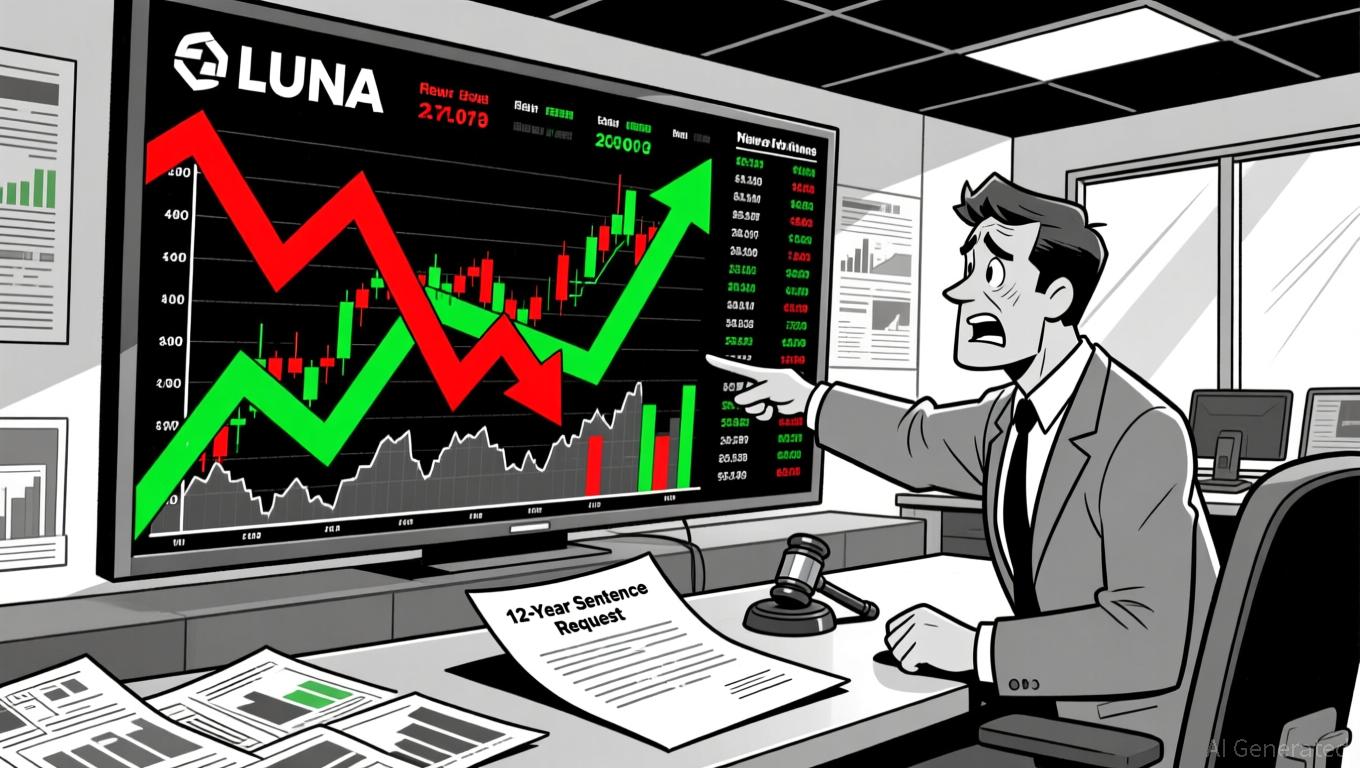
- LUNA surged 5.67% in 24 hours, driven by prosecutors' 12-year prison request for Terra founder Do Kwon. - Kwon faces charges over TerraUSD's collapse, which erased $40B, with prosecutors calling his actions "colossal in scope." - Market reacted strongly: Luna Classic jumped 130% while LUNA rose 70% amid renewed Terra ecosystem interest. - Sentencing on Dec 11 could reshape Terra's future, with legal outcomes potentially influencing crypto regulatory frameworks. - Investors warned of persistent volatility
AI Token Price Fluctuations and Investor Prudence: Insights from the ChainOpera Collapse and Strategies for Building Resilience
- ChainOpera AI's 2025 collapse exposed systemic risks in centralized crypto projects with opaque AI models and governance. - The token lost 90% of value due to liquidity imbalances, unaudited algorithms, and regulatory uncertainty under the U.S. CLARITY Act. - Post-crash lessons emphasize transparent governance, real-world utility, and compliance with frameworks like NIST AI RMF and ISO/IEC 42001. - Projects like ASI and Ocean Protocol demonstrate resilience through decentralized models, auditable systems
Trending news
MoreCrypto prices
More





