
ICP Network's Swift Expansion: Could It Revolutionize Decentralized Infrastructure?
- ICP Network's 2025 growth stems from AI-powered Caffeine platform and Chain Fusion cross-chain protocol, challenging Ethereum/Solana with on-chain AI execution and hybrid cloud partnerships. - Institutional adoption via Microsoft/Azure partnerships and UN projects boosts ICP's enterprise appeal, while tokenized BTC and IoT applications expand real-world use cases. - Despite 1.2M active wallets and $1.14B daily transactions, dApp engagement dropped 22.4%, revealing gaps between infrastructure development
ICP in 2025: Redefining Decentralized Infrastructure
As the blockchain sector evolves in 2025, a fierce competition is underway to reshape the future of decentralized infrastructure. The Internet Computer Protocol (ICP) has emerged as a significant player, attracting attention from both enterprises and developers searching for scalable, interoperable solutions that connect traditional cloud services with Web3 technologies. This review explores ICP’s investment prospects by examining its advancements in scalability, adoption patterns, market positioning, institutional involvement, and the risks it faces.
Innovative Technology: Building for Scale
ICP’s expansion in 2025 is fueled by a series of transformative upgrades that tackle persistent blockchain challenges. The introduction of the Caffeine AI-powered development platform in July 2025 has revolutionized decentralized application (dApp) development. By allowing developers to create applications using natural language, Caffeine lowers barriers to entry and speeds up development cycles, making the platform accessible to both newcomers and established organizations.
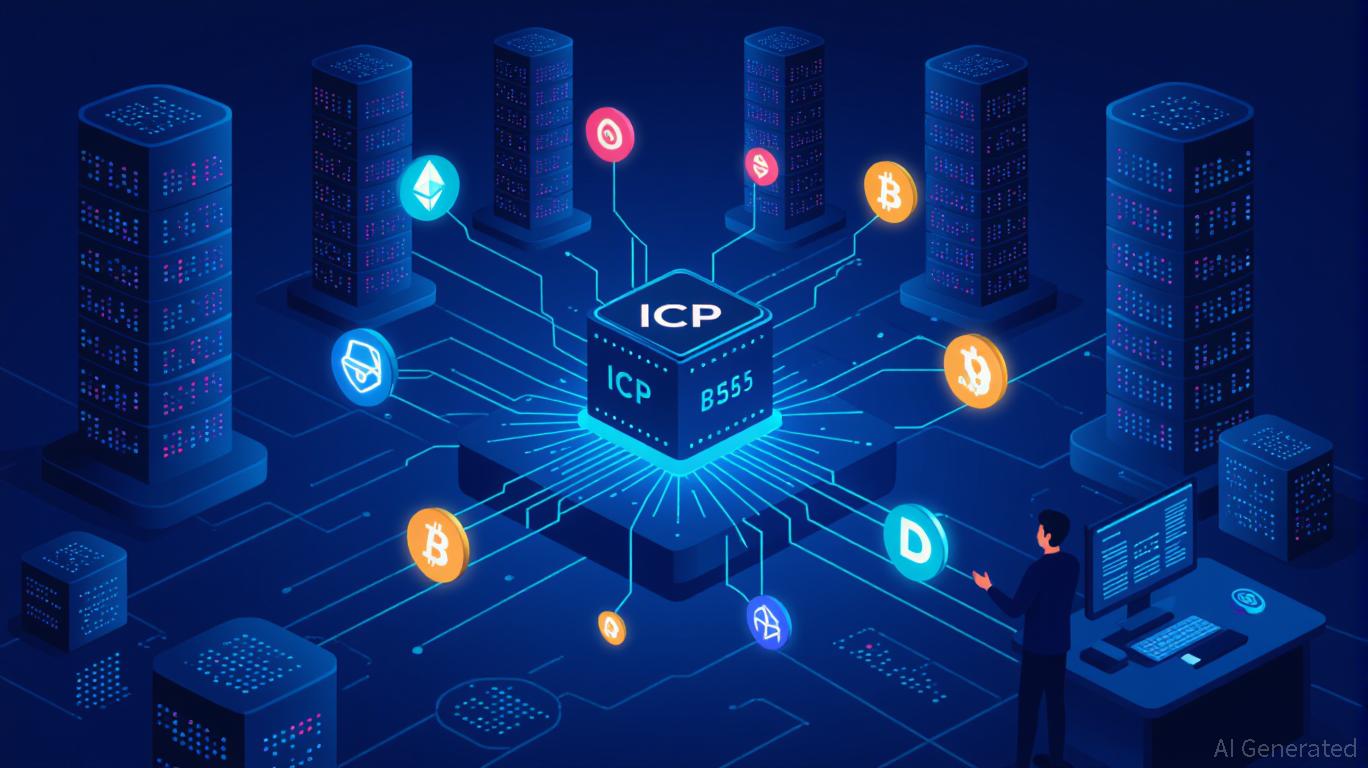
Another major leap is Chain Fusion, a protocol that enables direct interoperability with leading blockchains such as Ethereum, Solana, and Dogecoin—eliminating the need for centralized bridges. Utilizing ICP’s chain-key cryptography, Chain Fusion facilitates smooth asset and data transfers, paving the way for robust cross-chain DeFi and NFT ecosystems.
Further enhancements, including the Flux and Magnetosphere upgrades, have doubled subnet storage to 2 TiB and boosted computational power by 50%. These improvements support demanding applications like AI model hosting and media streaming, reinforcing ICP’s technical foundation.
Adoption Patterns: Growth and Engagement Challenges
ICP’s technical progress is reflected in its network statistics, with 1.2 million active wallets and daily transactions surpassing $1.14 billion by late 2025—figures propelled by institutional interest and the adoption of AI development tools. However, user engagement with dApps has dropped by 22.4%, highlighting a gap between infrastructure growth and actual user participation. This raises concerns about whether the network’s expansion is driven by genuine use or speculative investment.
Discrepancies in Total Value Locked (TVL) further complicate the picture. While the DFINITY Foundation reports a TVL of $237 billion, independent platforms like DeFiLlama and CoinGecko present much lower numbers, emphasizing the need for transparent and independently verified adoption data.
Competitive Landscape: ICP Versus Ethereum and Solana
ICP distinguishes itself by running smart contracts, data storage, APIs, and AI models entirely on-chain—a capability that sets it apart from Ethereum and Solana. While Ethereum leads in DeFi and metaverse applications, and Solana is known for its high transaction throughput, ICP’s reverse gas model and on-chain AI execution offer unique advantages for decentralized, AI-powered solutions.
Strategic partnerships with industry giants like Microsoft Azure and Google Cloud have validated ICP’s potential as a hybrid cloud platform, enabling businesses to leverage its infrastructure for enhanced privacy and scalability. In contrast, Ethereum and Solana are navigating regulatory pressures and internal competition. Although Solana’s CME futures and Bitwise’s $417 million staking ETF underscore its institutional appeal, ICP’s integration of Chain Fusion and AI provides a more comprehensive infrastructure for cross-chain and AI-centric applications.
Enterprise Adoption and Practical Applications
ICP’s collaborations with major institutions set it apart in the blockchain space. The Neuron Fund has attracted significant investment by supporting promising dApps, while real-world initiatives like the United Nations’ “Universal Trusted Credentials” project showcase ICP’s capabilities in secure digital certification. The platform’s ckBTC tokenization has also seen rapid growth, with the supply of tokenized BTC rising sharply in 2025.
Meanwhile, Ethereum and Solana have concentrated on tokenizing real-world assets and expanding into remittance services. Solana’s partnership with Western Union and Ethereum’s staking ETFs highlight their strengths in financial infrastructure. However, ICP’s ability to host AI models and support industrial IoT solutions—such as the IoTstar project for sustainability—positions it as a versatile platform for the next generation of industrial applications.
Risks and Uncertainties: Volatility and Regulation
Despite its advancements, ICP faces notable risks. The token has experienced significant price swings, with a 58.74% decline over the past year and a 3.88% drop in a single day, which may deter broader adoption. The decrease in dApp engagement also suggests that growth may be more speculative than organic.
Regulatory uncertainty remains a major challenge. Should ICP be classified as a security in key markets, it could be subject to stricter compliance requirements. Additionally, evolving regulations around AI could impact ICP’s core on-chain AI features. Concerns about token concentration among a small group of holders also raise questions about the network’s decentralization.
Investment Perspective: Weighing Promise and Risk
ICP’s roadmap for 2025 includes over 40 planned upgrades, with a focus on expanding Chain Fusion to Dogecoin and further enhancing AI tools like Caffeine and Ignition. Analysts forecast a price range of $11.15 to $31.89 for 2026, with the potential to reach $88.88 by 2030, assuming continued innovation and regulatory clarity.
For investors, ICP offers a high-risk, high-reward proposition. Its technical leadership in decentralized AI and cross-chain interoperability, combined with strong institutional partnerships, could drive substantial long-term value. However, current gaps in user engagement and ongoing volatility suggest that a cautious investment approach is warranted.
Summary
ICP’s rapid development in 2025 highlights its potential to transform decentralized infrastructure. By merging AI-driven development, seamless cross-chain connectivity, and enterprise-grade scalability, ICP addresses key challenges in blockchain adoption. Its future success will depend on closing the gap between infrastructure innovation and user engagement, navigating regulatory hurdles, and sustaining institutional interest. For those prepared to manage volatility, ICP’s strategic advancements make it a noteworthy contender in the evolving Web3 ecosystem.
Disclaimer: The content of this article solely reflects the author's opinion and does not represent the platform in any capacity. This article is not intended to serve as a reference for making investment decisions.
You may also like
Evaluating the Factors Driving the Recent Rise in Trust Wallet Token’s Value
- Trust Wallet Token (TWT) price surge stems from institutional adoption and ecosystem expansion, redefining its utility and market perception. - Partnerships with Ondo Finance (RWAs) and Onramper (fiat-to-crypto onramps) enhanced institutional credibility and global accessibility for 210 million users. - Utility-driven features like FlexGas (TWT-based transaction fees) and Trust Premium (loyalty incentives) boosted demand while reducing circulating supply. - 200M+ downloads and 17M monthly active users by

OpenAI secures business victory just days following internal 'code red' over Google competition

The Importance of Teaching Financial Skills Early for Building Lasting Wealth
- Financial literacy builds long-term wealth by enabling smarter money decisions, compounding growth, and avoiding investment traps. - Dutch studies show higher financial knowledge boosts income for young adults and savings for older individuals, proving causal impact. - Targeted education programs, like Invest in Girls, close gender gaps by teaching risk evaluation and adapting to developmental stages. - Early financial education—tracking allowances, simulating trades—fosters informed decision-making and

Infrastructure-Fueled Expansion of Industrial Real Estate in Upstate New York: Tapping into Lucrative Prospects via Targeted Grants and Brownfield Redevelopment
- New York state’s infrastructure grants and brownfield remediation strategies are transforming Upstate industrial real estate. - FAST NY’s $283M in funding since 2022 has revitalized 37 projects, including Genesee County’s green hydrogen hub and Webster’s Xerox campus redevelopment. - Brownfield cleanup tax credits and "bluefield" zoning policies in Webster reduced industrial vacancy rates to 2% and boosted residential property values by 10.1%. - The $300M POWER UP initiative upgrades energy infrastructur
Trending news
MoreCrypto prices
More





