
Long-Term Care and Dementia-Oriented Stocks: A Tactical Safeguard Against Rising Healthcare Expenses
- Global aging drives healthcare cost inflation, with U.S. dementia expenses hitting $781B in 2025, straining Medicare/Medicaid programs. - Long-term care ETFs like HTEC and HEAL outperform as health tech innovation addresses rising demand for remote monitoring and AI diagnostics. - Dementia-focused equities (Anavex, AbbVie) show resilience amid $7.7B market growth projections, aligned with aging demographics and policy reforms. - Strategic investments in care-tech and pharmaceuticals offer inflation hedge
The Impact of an Aging Population on Investment Strategies
As the global population grows older, the investment environment is undergoing significant transformation. One of the most pressing issues of our time is the rapid rise in healthcare expenses. In the United States alone, the financial toll of dementia is expected to hit $781 billion by 2025, with $232 billion dedicated to medical and long-term care. Public health programs are feeling the strain, with Medicare and Medicaid shouldering $106 billion and $58 billion of these costs, respectively. This mounting pressure on government resources highlights both the challenges and opportunities for investors. While escalating healthcare costs threaten economic stability, they also open doors for those investing in stocks and exchange-traded funds (ETFs) that focus on long-term care and dementia solutions. These investment vehicles are increasingly viewed as effective hedges against inflation and merit careful consideration.
The Financial Weight of Dementia and Government Support
Dementia is not just a health crisis—it is a major economic concern. By 2025, 5.6 million Americans are projected to be living with dementia, a trend that has driven Medicare expenditures to $1.03 trillion in 2023, marking an 8.1% annual rise. Medicaid spending has also climbed, reaching $871.7 billion with a 7.9% yearly increase. Individuals with Alzheimer’s disease incur Medicare costs nearly three times higher than those without, and Medicaid payments for dementia patients are over 22 times greater. As forecasts suggest the number of Americans with dementia could triple by 2060, the financial burden on public programs will only intensify. This scenario underscores the importance of investment strategies that align with demographic and healthcare realities.
Long-Term Care ETFs: Building a Resilient Portfolio

Although the healthcare sector has underperformed in 2025, trading at a 10% discount to its fair value, ETFs specializing in long-term care are proving to be robust options. Funds like the ROBO Global Healthcare Technology and Innovation ETF (HTEC) and the Global X HealthTech ETF (HEAL) have surpassed the broader healthcare market, with HTEC recently moving above its 200-day moving average and revisiting its 2025 peaks. These ETFs emphasize innovation in health technology, a sector experiencing rapid growth due to increased demand for remote monitoring, artificial intelligence diagnostics, and caregiver support systems.
Traditional healthcare ETFs, including the iShares Global Healthcare ETF (IXJ) and the Vanguard Health Care ETF (VHT), continue to be foundational choices for long-term investors. While recent performance has been affected by tariffs and economic volatility, their focus on pharmaceuticals, biotechnology, and medical devices positions them to benefit from the aging population. For those seeking protection against inflation, commodities-based ETFs and Treasury Inflation-Protected Securities (TIPS) can complement a portfolio, but long-term care investments offer a more direct response to demographic shifts.
Investing in Dementia Treatment: Opportunities in Equities
Beyond ETFs, individual companies specializing in dementia care are demonstrating strong financial performance. For example, Anavex Life Sciences has secured over three years of operational funding with $120 million in reserves and is advancing a promising Alzheimer’s drug, blarcamesine. AbbVie’s neuroscience division generated $2.84 billion in revenue in the third quarter of 2025, reflecting strong demand for therapies targeting cognitive decline in older adults.
Amgen’s commitment to cardiometabolic treatments, which often intersect with age-related diseases, further highlights the sector’s growth potential. While direct links between company revenues and government healthcare spending may not always be clear, the expansion of the dementia care market is driving growth. The Alzheimer’s drug market was valued at $7.7 billion in 2023 and is expected to grow at an annual rate of 5.3% through 2032, propelled by increasing prevalence and ongoing innovation.
Key Considerations for Investors
- Demographic Trends: The U.S. population aged 65 and older is projected to rise from 56 million in 2025 to 80 million by 2040, ensuring continued demand for long-term care services.
- Policy Developments: Changes to Medicare and Medicaid, such as broader coverage for new Alzheimer’s treatments, could reshape reimbursement models and boost pharmaceutical revenues.
- Technological Innovation: The adoption of AI-powered caregiving tools and home healthcare services is expected to expand rapidly, with growth rates between 10% and 17% annually, offering scalable solutions to meet rising care needs.
Nevertheless, there are risks to consider. The financial health of Medicare is under review, with potential reforms including benefit reductions and funding changes. Investors must also weigh the high price tags of new dementia treatments—such as Leqembi, which could cost Medicare $3.5 billion each year by 2025—against their clinical benefits. Diversifying across ETFs, individual stocks, and alternative assets like TIPS remains a wise approach.
Conclusion: Navigating the Intersection of Aging and Investment
The dual forces of an aging population and surging dementia care costs present both a daunting challenge for policymakers and a promising opportunity for investors. By focusing on long-term care and dementia-related equities, as well as ETFs that prioritize healthcare innovation, investors can position themselves to benefit from demographic and policy shifts. As government healthcare spending continues to rise, these assets are well-placed to capture growth. For those looking to invest at the crossroads of aging, healthcare, and finance, the future of care represents not only a societal necessity but also a compelling investment narrative.
Disclaimer: The content of this article solely reflects the author's opinion and does not represent the platform in any capacity. This article is not intended to serve as a reference for making investment decisions.
You may also like
AAVE drops 1.47% amid Aave’s overhaul of its multichain approach
- Aave's multichain strategy shift caused AAVE to drop 1.47% despite 7.08% weekly gains. - Governance proposal aims to consolidate operations on high-revenue chains like Ethereum , phasing out low-performing deployments. - Strategy prioritizes capital efficiency and risk management by focusing liquidity on core networks with stronger revenue potential. - Unanimous DAO support signals industry trend toward quality-focused chain selection over maximalist expansion in DeFi.

LUNA Price Remains Steady as U.S. Lawmakers Advance Stock Trading Ban
- LUNA's price remained stable at $0.0727 in 24 hours but fell 82.47% annually amid U.S. legislative efforts to restrict congressional stock trading. - Rep. Anna Paulina Luna's bipartisan bill seeks to ban lawmakers, spouses, and children from individual stock trading to address ethical conflicts. - The bill, supported by 100+ co-sponsors, faces opposition over financial flexibility concerns for lower-income legislators amid unchanged congressional salaries since 2009. - A discharge petition aims to force

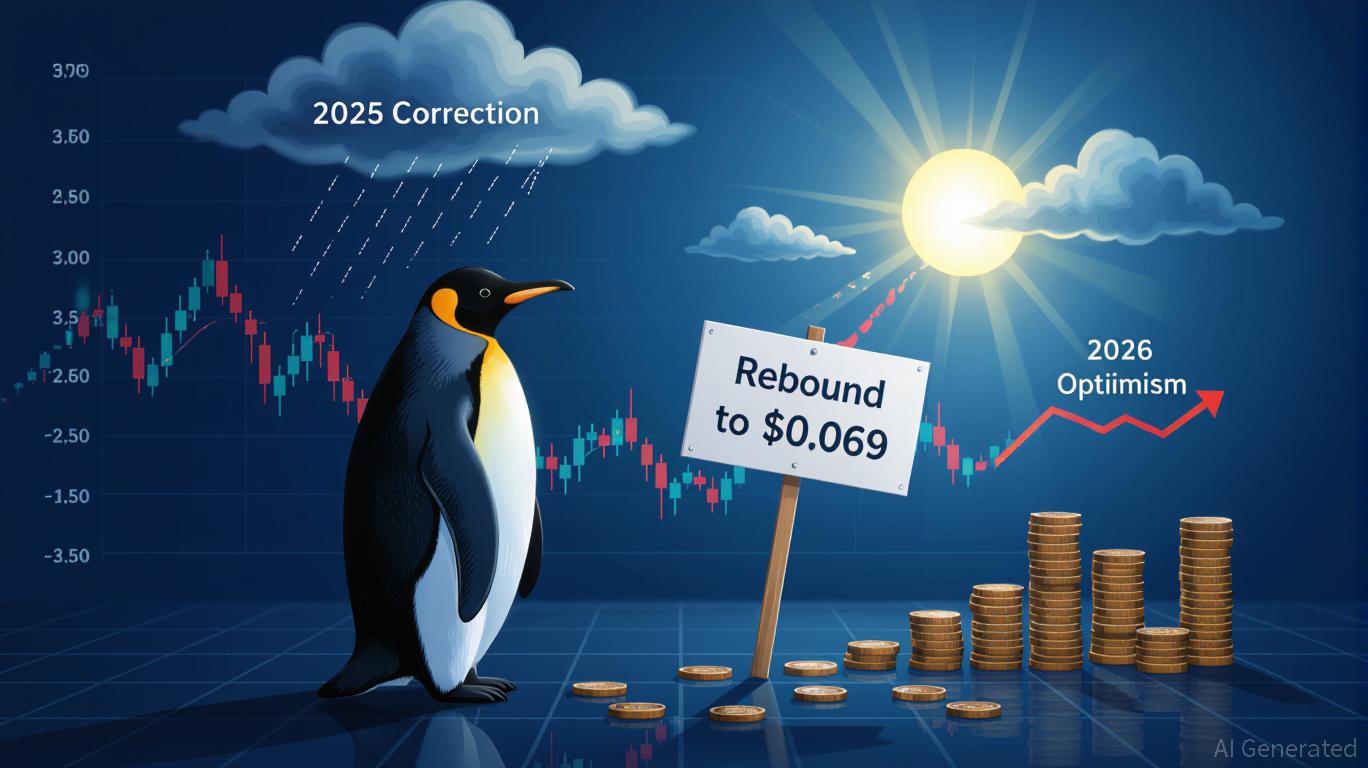
PENGU Price Forecast for 2026: Managing Fluctuations and Momentum from Key Catalysts After the 2025 Market Adjustment
- 2025 crypto market correction reshaped altcoin dynamics as Bitcoin/Ethereum declined amid macroeconomic uncertainty and regulatory pressures. - Pudgy Penguins (PENGU) saw sharp volatility post-correction, with technical indicators suggesting potential $0.069 rebound by 2026 if adoption metrics align. - Strategic partnerships with Bitso and cross-chain integrations, plus Kung Fu Panda NFT collaborations, aim to boost PENGU's liquidity and mainstream adoption. - Despite 12% early 2026 price drop, Pudgy Inv
ZEC Value Increases by 4.82% Following Recent Exchange Listing
- Zcash (ZEC) surged 4.82% in 24 hours after Bitget listed it for spot trading on Dec 3, 2025, boosting short-term liquidity and visibility. - Zcash’s zero-knowledge proof technology enables encrypted transactions while maintaining blockchain integrity, distinguishing it as a privacy-focused asset. - Bitget’s UEX model supports multi-chain access, aligning with Zcash’s goal to balance transparency and privacy, though recent 7-day and 1-month declines highlight market volatility risks.

Trending news
MoreCrypto prices
More






