Bitget App
Trade smarter
Buy cryptoMarketsTradeFuturesEarnSquareMore
UK recognises crypto as property in major digital asset shift

UK recognises crypto as property in major digital asset shift

CoinjournalCoinjournal2025/12/03 09:51
By:Coinjournal
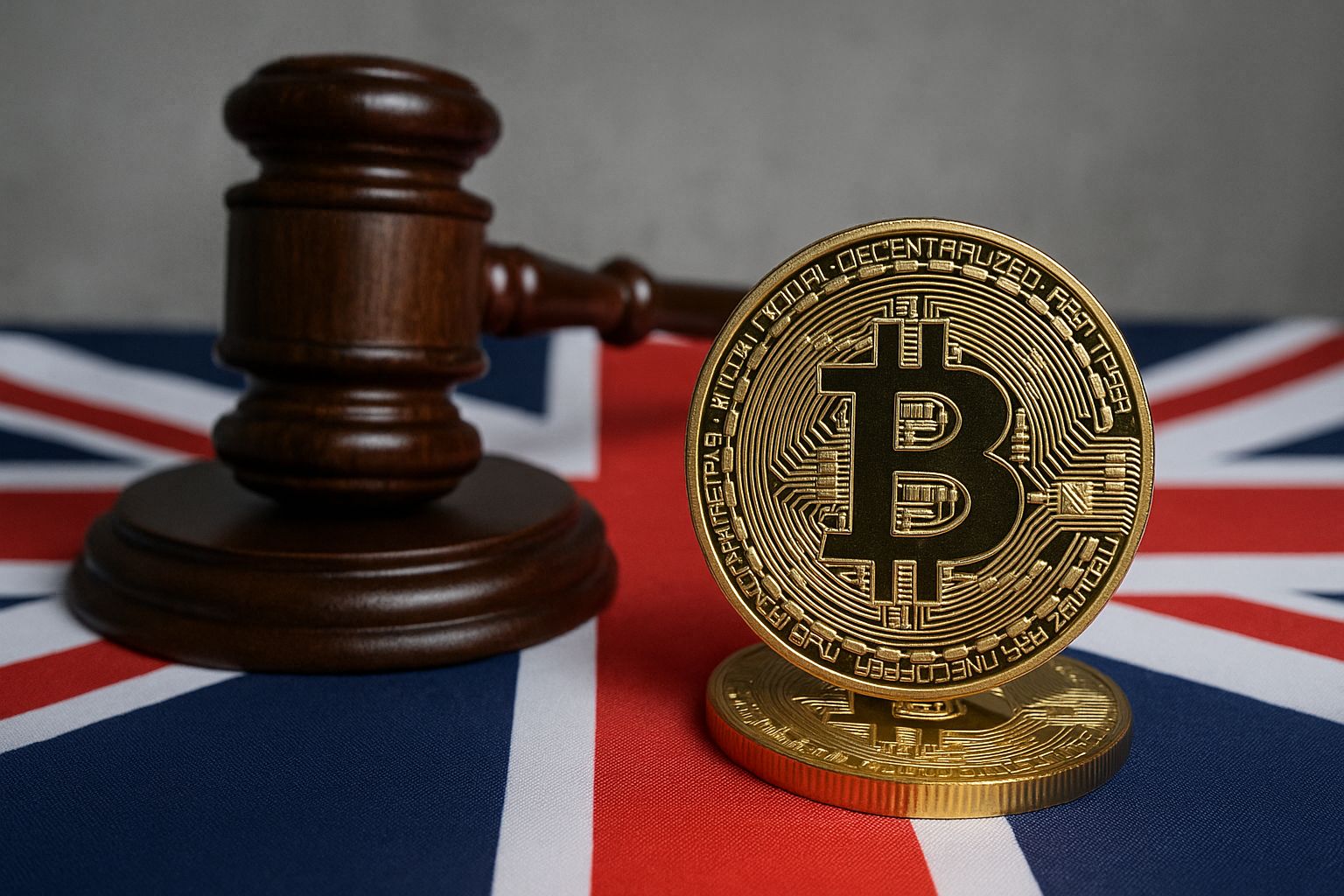
UK recognises crypto as property in major digital asset shift image 0
  • UK law now formally recognises cryptocurrencies as personal property under new legislation.
  • The Property Digital Assets Act gives courts clearer rules for ownership and asset recovery.
  • Rising crypto adoption pushed the UK to strengthen legal clarity for digital asset rights.

The UK has made a major change to how digital assets are treated in law, confirming that cryptocurrencies and other electronic tokens qualify as personal property.

The update became official when the Property Digital Assets Bill received royal assent in the House of Lords this week, with Lord Speaker John McFall announcing that King Charles had formally approved it.

The move arrives as crypto adoption continues to rise across the country and as courts have been settling digital asset disputes without a clear statutory framework.

By writing this principle into legislation, the UK aims to reduce uncertainty for users when proving ownership, recovering stolen assets, or handling digital holdings during insolvency or estate processes.

UK gives digital assets a clear legal status

Until now, UK courts recognised crypto as property only through common law, meaning judges reached conclusions based on earlier rulings rather than a specific statute.

The new law follows a 2024 recommendation from the Law Commission of England and Wales, which said that digital assets should be treated as a new form of personal property because they do not fit neatly into existing categories.

Personal property in the UK traditionally falls into two groups: a “thing in possession,” which refers to physical items, and a “thing in action,” which refers to enforceable rights such as debts or contracts.

Digital assets sit between these definitions.

They exist electronically, can be transferred like possessions, and are used in financial systems, yet they do not align perfectly with one category.

The bill clarifies that digital or electronic items can still be recognised as property even if they are neither a physical object nor an enforceable claim.

The Law Commission warned that the unclear fit of digital assets could complicate court decisions, especially when resolving disputes involving ownership or loss.

Growing adoption pushes the UK toward stronger rules

The new legislation forms part of a wider push to build a structured framework for digital assets.

The goal is to strengthen consumer protection while encouraging innovation in digital finance.

Adoption continues to expand. Late last year, the financial regulator reported that roughly 12% of UK adults hold cryptocurrency, up from 10% in its previous findings.

The rise signals that more users are engaging with digital assets, making legal clarity an essential part of future policy planning.

By recognising crypto as personal property and preparing broader regulations, the UK is aiming to support the digital economy while giving users a firmer understanding of their rights.

The shift is expected to shape future industry practices and improve how courts interpret disputes involving blockchain-based assets.


0
0

Disclaimer: The content of this article solely reflects the author's opinion and does not represent the platform in any capacity. This article is not intended to serve as a reference for making investment decisions.

PoolX: Earn new token airdrops
Lock your assets and earn 10%+ APR
Lock now!

You may also like

Bitcoin Leverage Liquidations Spike in Early December 2025: An Important Lesson on Managing Risks in Unstable Markets

- Early December 2025 saw over $1B in leveraged Bitcoin bets liquidated as prices dropped below $86,000, with major exchanges reporting losses exceeding $160M each. - Sharp price swings and macroeconomic pressures like Japan's hawkish signals triggered cascading liquidations, exposing systemic risks in high-leverage crypto trading. - Institutional investors remained resilient amid the selloff, contrasting retail traders' margin calls and highlighting crypto ETF inflows as stabilizing factors during market

Bitget-RWA2025/12/03 16:32
Bitcoin Leverage Liquidations Spike in Early December 2025: An Important Lesson on Managing Risks in Unstable Markets

Hyperliquid's Growing Popularity and Trading Volume: Evaluating Its Potential as a Lasting DeFi Investment

- Hyperliquid dominates 2025 DeFi perpetuals with $2.74T volume, rivaling Coinbase via HyperBFT's 200k TPS and sub-second finality. - Market share dropped from 73% to 38% as competitors like Aster emerged, though Hyperliquid maintains 62-63% Perp DEX open interest. - Governance innovations (HIP-1/3) enable permissionless listings while 93% fee buybacks and $5B TVL boost HYPE token value. - Regulatory risks and $4.9M security loss highlight vulnerabilities despite BlackRock/Stripe partnerships and SEC ETF a

Bitget-RWA2025/12/03 16:14
Hyperliquid's Growing Popularity and Trading Volume: Evaluating Its Potential as a Lasting DeFi Investment

PENGU Token's Latest Price Rally and Technical Evaluation

- PENGU token surged past $0.0100 in late 2025, driven by Bitcoin rebound, whale accumulation, and Pudgy Penguins' project developments. - Technical analysis shows overbought RSI (73.76) and key support/resistance levels at $0.012-$0.0135, signaling potential volatility. - Market psychology blends speculative FOMO with strategic utility growth through "Pudgy Party" and NHL partnerships, though macro risks like Fed policy remain critical. - Analysts caution investors to balance short-term momentum with long

Bitget-RWA2025/12/03 16:14
PENGU Token's Latest Price Rally and Technical Evaluation

The PENGU USDT Sell Indicator and What It Means for the Stability of Stablecoins

- The 2025 PENGU USDT sell signal exposed algorithmic stablecoins' fragility, triggering systemic risks through reflexivity and eroded trust. - The U.S. GENIUS Act excludes algorithmic stablecoins from regulatory frameworks, pushing them into a legal gray area with limited consumer protections. - Technical flaws like smart contract vulnerabilities and oracle dependencies exacerbate instability, compounding market confidence erosion during crises. - Investors now prioritize fiat-backed stablecoins, CBDCs, a

Bitget-RWA2025/12/03 16:14
The PENGU USDT Sell Indicator and What It Means for the Stability of Stablecoins
© 2025 Bitget