
Exchanges Call on SEC: Deny Exemptions to Maintain Fairness in the Market
- WFE warns SEC against broad crypto exemptions for tokenized stocks, citing risks to investor protections and market integrity. - Tokenized stocks lack dividend rights, voting access, and custody frameworks, creating "mimicked products" with weaker safeguards. - SEC's sandbox-style exemptions risk regulatory arbitrage, allowing crypto platforms to bypass rules enforced on traditional exchanges. - Global bodies like IOSCO warn tokenization amplifies data integrity and custody risks, urging unified standard
WFE Urges SEC to Maintain Strict Oversight on Tokenized Stock Platforms
The World Federation of Exchanges (WFE), which counts over 70 major exchanges such as the New York Stock Exchange and CME Group among its members, has cautioned the U.S. Securities and Exchange Commission (SEC) against granting sweeping regulatory exemptions to crypto platforms that offer tokenized stocks. The WFE contends that relaxing these rules could weaken investor protections and undermine the stability of financial markets by letting unregulated players sidestep established safeguards. In a letter addressed to the SEC's Crypto Task Force, the federation expressed concern that tokenized stocks—digital representations of traditional equities—are often promoted as equivalent to actual shares, despite lacking comparable legal rights and regulatory oversight, as highlighted by LookOnChain data.
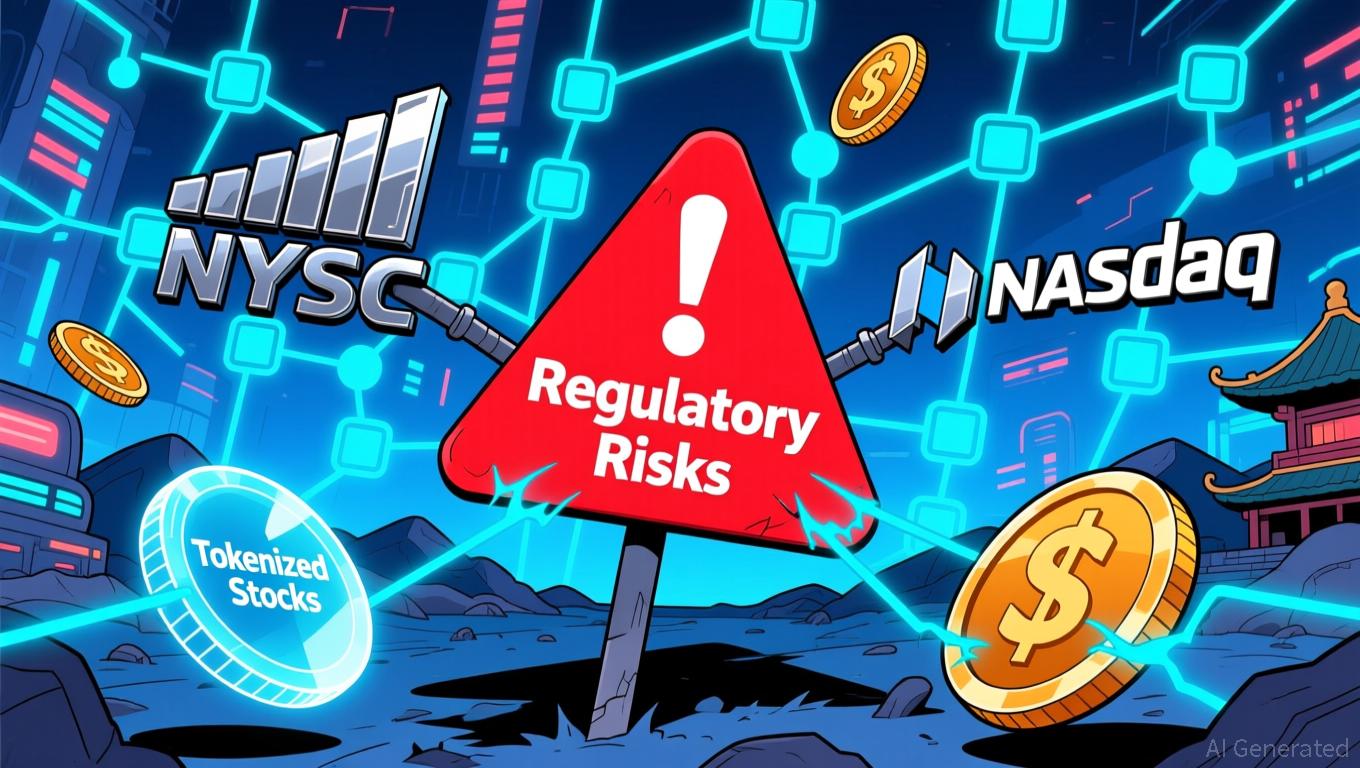
Tokenized stocks, which use blockchain technology to mirror the value of publicly traded company shares, have become increasingly popular due to their promise of round-the-clock trading and quicker settlement times. Nevertheless, the WFE warns that these digital assets frequently do not provide essential investor rights, such as access to dividends, voting privileges, or robust custody arrangements. "These imitation products fall short of the high standards investors expect," said WFE CEO Nandini Sukumar in a letter dated August 26 to the SEC. The federation stressed that regulatory exemptions should only be considered if they foster fair competition and serve the public interest, in line with the WFE’s principles.
The SEC is currently considering a regulatory sandbox that would allow crypto companies to experiment with tokenized stocks under temporary exemptions, a strategy supported by SEC Chair Paul Atkins as a way to encourage innovation while retaining regulatory oversight. However, the WFE warns that this approach could create opportunities for regulatory arbitrage, enabling crypto platforms to operate under less stringent rules than traditional exchanges. "Both traditional exchanges and crypto platforms should compete under equal conditions," stated James Auliffe, who leads the WFE’s Technology Working Group.
This debate comes as tokenized assets experience rapid expansion, with their global market value recently surpassing $2 billion. Critics, including securities law specialist Tim Fries, caution that without robust regulations, tokenized stocks could leave investors vulnerable to fraud, flaws in smart contracts, and limited avenues for resolving disputes. The WFE’s concerns are echoed by global organizations such as the International Organization of Securities Commissions (IOSCO), which warned in November 2025 that tokenization can heighten risks related to data reliability and asset custody.
The SEC’s ongoing discussions are part of a larger international trend to find the right balance between fostering innovation and ensuring effective oversight. While regions like the European Union, Hong Kong, and Singapore have introduced comprehensive digital asset regulations, the U.S. continues to rely on case-by-case exemptions. The WFE is calling for a harmonized global regulatory framework, urging the SEC to require clear disclosures, enforce redemption rights, and ensure that tokenized products specify whether they represent actual ownership or synthetic exposure, in accordance with the federation’s recommendations.
As the SEC deliberates its next steps, the outcome could mark a turning point for capital markets. Supporters of tokenization believe it can broaden access and lower transaction costs, but emphasize that these benefits should not come at the expense of established investor protections. With growing consensus among major financial institutions and regulators against unregulated experimentation, the future of tokenized stocks may depend on carefully monitored pilot programs that integrate blockchain technology while preserving market confidence.
Disclaimer: The content of this article solely reflects the author's opinion and does not represent the platform in any capacity. This article is not intended to serve as a reference for making investment decisions.
You may also like
Bitcoin Updates Today: Bitcoin Faces Challenges Amid Stablecoin Uncertainty and Changing Regulations
- Bitcoin's structural resilience persists amid monthly volatility, driven by evolving regulations, institutional adoption, and shifting market sentiment. - SEC's 2025 regulatory framework aims to streamline crypto oversight, potentially reducing uncertainty and aligning with global standardization efforts. - Tether's USDT stability downgrade raises concerns over Bitcoin's role in reserves, while Arthur Hayes predicts $80k-$250k price swings tied to liquidity and Fed policy. - Infrastructure projects like
Bitcoin News Update: Cryptocurrency Markets Confront Threefold Challenges: Increased Regulatory Oversight, Shifting Corporate Strategies, and Technical Hurdles Hamper BTC Rebound
- Asian markets and crypto assets fell as Japan's BOJ policy shifts drove capital out of equities and digital currencies, with Bitcoin dropping below $82,000. - Tether defended its USDt stablecoin amid S&P's "weak" rating, citing $215B in Q3 2025 assets, but ongoing stability concerns persist in the crypto sector. - Binance faces legal challenges including a Hamas attack-related lawsuit, compounding regulatory risks for crypto exchanges amid compliance scrutiny. - Grayscale's Zcash ETF filing highlights ni

Ethereum News Update: Apeing’s 10x Presale Advantage Depends on Prompt Community Participation
- Apeing ($APEING) presale offers 10x potential gains via early whitelist access, contrasting its $0.0001 presale price with a projected $0.001 listing. - Community-driven projects like FARTCOIN and PEPE demonstrate how cultural relevance and engagement drive meme coin growth, mirroring Apeing's strategy. - Ethereum's gas improvements and XRP's institutional adoption create a favorable market backdrop, supporting speculative meme coin opportunities. - Investors are urged to assess risks despite projected 1

Deciphering the ZKsync Boom: The Impact of Vitalik's Support on Layer 2 Adoption
- Vitalik Buterin's endorsement boosted ZKsync's $ZK token by 143%, signaling growing institutional and retail confidence in ZK rollups. - The Atlas upgrade achieved 43,000 TPS with 70% lower gas fees, attracting Deutsche Bank and UBS for asset tokenization and compliance solutions. - ZKsync trails Arbitrum ($16.63B TVL) but aims to close gaps via privacy-centric design and the upcoming Fusaka upgrade targeting 30,000 TPS. - Institutional partnerships and Ethereum's ZK roadmap position ZKsync as a key play
Trending news
MoreCrypto prices
More





