

On-chain analytics provide significant insights into the future by leveraging the advantages of cryptocurrencies and blockchain technology. Detailed analysis of investor behavior, trends, and cycles are among the primary benefits of on-chain analytics for cryptocurrency investors. CryptoQuant analysts foresee a significant development awaiting us.
var litespeed_vary=document.cookie.replace(/(?:(?:^|.*;\s*)_lscache_vary\s*\=\s*([^;]*).*$)|^.*$/,"");litespeed_vary||fetch("/wp-content/plugins/litespeed-cache/guest.vary.php",{method:"POST",cache:"no-cache",redirect:"follow"}).then(e=>e.json()).then(e=>{console.log(e),e.hasOwnProperty("reload")&&"yes"==e.reload&&(sessionStorage.setItem("litespeed_docref",document.referrer),window.location.reload(!0))});Cryptocurrencies and the Demand Wave
Demand is the determinant of price, and numerous factors influence demand in cryptocurrencies, such as news and macroeconomic shifts. Regardless, demand waves drive prices up, while indifference triggers bear markets. In fact, news flow that fosters indifference shapes the general framework of the story.
CryptoQuant analysts mention that in the current cycle, Bitcoin
- The first wave materialized at the start of 2024 with the listing of spot Bitcoin ETFs.
- The second wave followed the 2024 U.S. elections, driven by Trump’s victory and his pro-crypto stance, with altcoins witnessing peak days by the end of 2024.
- The third surge was the corporate Bitcoin Treasury bubble. In June, major players’ entry into Ethereum
propelled it to ATH levels, though MNAV issues hindered further bubble growth.
 $2,975.10

In essence, all three waves promise more long-term growth for cryptocurrencies. However, if demand waves weaken, growth could become slower or might periodically resurge in pace.
The Decline of Cryptocurrencies
The absence of further demand waves predicts a short-term decline in cryptocurrencies. Analysts even suggest that the reversal of these demand waves signifies the onset of bear markets. This perspective further explains why Fidelity anticipates a flat to downward performance for cryptocurrencies in 2026.
“Demand from institutional and large investors is no longer expanding but contracting: US spot Bitcoin ETFs became net sellers by Q4 2025, contrasting sharply with the robust accumulation observed in Q4 2024, as their holdings decreased by 24K BTC. Similarly, addresses holding 100-1,000 BTC, representing ETFs and treasury companies, grow below trend, reflecting demand shrinkage seen at the end of 2021 before the 2022 bear market.
Derivative markets confirm weakened risk appetite: Funding rates in futures (365-day moving average) have plummeted to their lowest since December 2023. Historically, declining funding rates indicate reduced willingness to maintain long positions, a pattern consistently observed during bear markets rather than bull market periods.
Price structure deteriorated parallel to waning demand: Bitcoin has fallen below its 365-day moving average, a critical long-term technical support level historically separating bull and bear markets.
Bitcoin’s four-year cycle is driven by demand cycles, not halvings: The current decline is primarily driven by expansions and contractions in demand growth.” – CryptoQuant Analysts
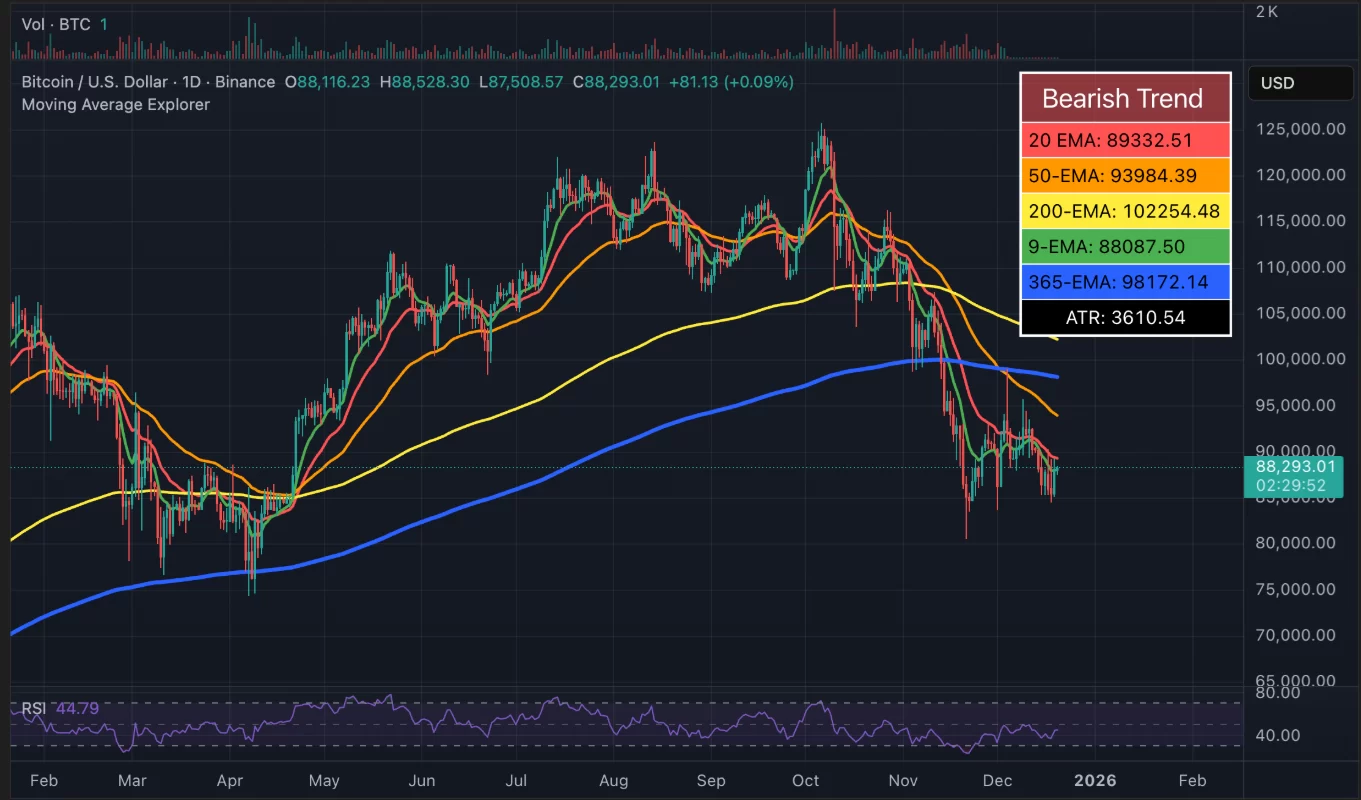
What is the target price? Analysts expect the realized price region at $56,000, with an intermediate support level predicted at $70,000.





