
Community Steps Up to Lead as STON.fi Unveils TON’s Inaugural DAO
- STON.fi launches TON's first full DAO, enabling 5.6M users to stake STON tokens for governance via ARKENSTON voting rights. - The DAO prioritizes long-term stakeholders through staking duration incentives, aligning liquidity providers, developers, and users. - With $6.6B in swap volume and 29.8M operations, STON.fi positions itself as TON DeFi's foundational infrastructure provider. - CEO highlights DAO's role in democratizing governance, validated by 115 community proposals during a four-week testing ph
STON.fi Unveils Its First Fully Decentralized DAO on TON
STON.fi, a prominent DeFi protocol operating on The Open Network (TON), has introduced its inaugural fully decentralized autonomous organization (DAO). This milestone marks a significant move toward transparent governance and community-led development within the TON ecosystem. The DAO empowers more than 5.6 million users to stake their STON tokens, earning ARKENSTON—non-transferable voting tokens that reflect both the amount staked and the duration of commitment. This design ensures that those most invested in the platform have the greatest influence, aligning the interests of liquidity providers, developers, and users for the long term.
This development highlights STON.fi’s dedication to decentralization, a principle at the heart of its mission since launch. By shifting from a developer-centric governance model to one led by its community, STON.fi aims to set a new standard for responsible and sustainable growth in TON’s DeFi sector. CEO Slavik Baranov noted that the DAO turns collaborative ideals into practical action, granting users a direct role in shaping the protocol’s future. During a four-week trial period, the community submitted 115 proposals, covering everything from user experience enhancements to strategic innovations—demonstrating both technical readiness and strong user engagement.
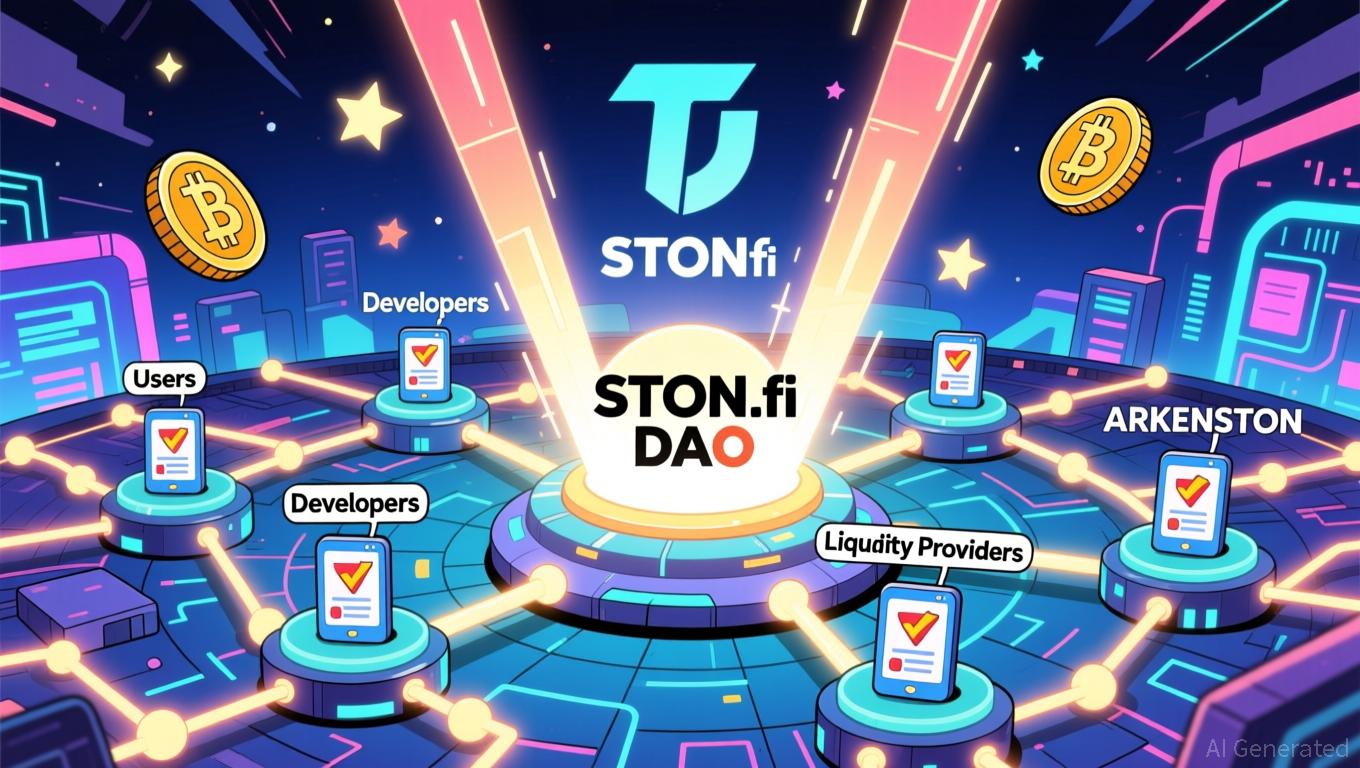
Operating within a rapidly growing ecosystem, STON.fi has already processed nearly 30 million transactions and facilitated over $6.6 billion in swap volume, accounting for the majority of DeFi activity on TON. As the first protocol on TON to launch a comprehensive DAO, STON.fi positions itself as a key infrastructure provider—serving as a guiding force for the network’s DeFi landscape. The DAO model is integrated with existing tools like Omniston, a decentralized liquidity aggregator, creating a unified system where governance, ownership, and responsibility are distributed among participants.
The launch of STON.fi’s DAO reflects a broader movement in blockchain governance, where active user participation is increasingly shaping the direction of projects. By focusing on security, scalability, and accessibility, STON.fi’s approach aligns with TON’s vision for open and inclusive financial infrastructure. The project has attracted support from investors such as CoinFund and Delphi Ventures, who share its goal of democratizing DeFi and extending that ethos to governance. While challenges like voter disengagement and governance vulnerabilities persist in the DAO model, STON.fi’s emphasis on long-term staking incentives is designed to keep decision-makers aligned with the protocol’s ongoing success and resilience.
Disclaimer: The content of this article solely reflects the author's opinion and does not represent the platform in any capacity. This article is not intended to serve as a reference for making investment decisions.
You may also like
The ChainOpera AI Token Collapse: A Cautionary Tale for AI-Powered Cryptocurrency Markets?
- ChainOpera AI (COAI) token's 96% collapse in late 2025 exposed systemic risks in AI-blockchain markets, mirroring 2008 crisis patterns through centralized governance and speculative hype. - COAI's extreme centralization (96% supply in top 10 wallets) and tokenomics (80% locked until 2026) created liquidity crises, undermining blockchain's decentralized ethos. - Regulatory actions intensified post-crash, with SEC/DOJ clarifying custody rules and targeting fraud, yet CLARITY/GENIUS Acts created compliance

The COAI Token Fraud: An Urgent Warning for Individual Investors in the Cryptocurrency Market
- COAI token's 88% devaluation in late 2025 erased $116.8M, exposing systemic risks in AI-integrated DeFi ecosystems. - Centralized control (87.9% tokens in 10 wallets) and algorithmic stablecoin failures enabled coordinated manipulation and liquidity collapse. - Regulatory gaps allowed cross-border operations in jurisdictions like Southeast Asia, highlighting urgent need for AI-powered oversight and standardized protocols. - Investors must prioritize smart contract audits, transparent governance, and on-c
Examining the Latest Decline in PENGU Value: Key Drivers and What It Means for Cryptocurrency Investors
- Pudgy Penguins (PENGU) plummeted 30% in late 2025 due to regulatory uncertainty, algorithmic trading triggers, and a $66.6M team activity event. - The collapse exposed systemic risks in crypto, including stablecoin liquidity crises and interconnectedness with traditional finance via ETFs and leverage. - Investors are urged to prioritize diversification, liquidity monitoring, and regulatory compliance to mitigate risks from opaque projects and volatile markets.
DOGE rises 5.58% over 24 hours following Japan’s introduction of a reform unit focused on efficiency
- Japan launched its Department of Government Efficiency (DOGE) on Dec 2, 2025, to audit and eliminate inefficient tax breaks and subsidies. - The initiative, modeled on but distinct from the U.S. DOGE , emphasizes data-driven reviews and public feedback to redirect funds to priority areas. - Finance Minister Taro Aso stressed alignment with Bank of Japan's monetary policy and fiscal transparency, aiming to restore public trust amid economic challenges. - Reforms targeting outdated subsidies will begin in
Trending news
MoreCrypto prices
More





