
AI’s Energy Dilemma: Driving Progress Amid Rising Power Expenses
- 2026 sees crypto and AI sectors poised for growth, with BNB , Solana , and Ozak AI highlighted as key performers in energy and enterprise AI integration. - AI's role in energy infrastructure expands through grid optimization and renewable integration, though data centers drive electricity price surges in key states. - AI firms show mixed financial results: C3.ai faces projected losses amid declining revenue, while peers like Teradata show divergent Q3 2025 performance. - Macroeconomic risks and regulator
AI and Cryptocurrency Sectors Poised for a Transformative 2026
The coming year is shaping up to be a turning point for both the cryptocurrency and artificial intelligence industries. BNB and Solana are projected to continue their robust growth, while Ozak AI is gaining attention as a possible standout performer. The rapid adoption of AI in energy infrastructure, combined with evolving earnings trends among technology companies, highlights a landscape defined by both innovation and heightened volatility.
AI’s Expanding Role in Energy Systems
Artificial intelligence is being increasingly woven into the fabric of energy management. Companies are utilizing machine learning to streamline grid operations, improve the integration of renewable resources, and minimize inefficiencies. For instance, Kraken Technologies uses AI to balance renewable energy supply with real-time consumption, and Camus Energy applies predictive analytics to anticipate electricity demand and maintain grid stability during peak periods. These technological leaps underscore AI’s dual impact: while it offers solutions to pressing energy challenges, it also contributes to rising electricity consumption, as seen in states like Virginia and Illinois where AI-driven data centers have pushed up power prices.
Mixed Financial Results for AI Companies
The financial outlook for AI-centric businesses remains uncertain. C3.ai (NYSE:AI), a prominent provider of enterprise AI software, is facing challenges ahead of its December 3, 2025 earnings report. Analysts expect the company to post a loss of $0.32 per share and revenue of $75.14 million, marking a 20.35% year-over-year decrease. This continues a trend of underperformance, with C3.ai’s stock declining by 16.85% over the past month, despite occasional outperformance against the S&P 500. Other firms in the data infrastructure space, such as Teradata and Elastic, have also reported varied results for the third quarter of 2025.
Upcoming Earnings and Market Volatility
The December 2025 earnings season introduces additional uncertainty. Major players like MongoDB, Salesforce, and Snowflake are preparing to announce their results amid shifting investor sentiment. For AI-related stocks, these earnings reports could heighten market swings, especially as companies like C3.ai contend with falling revenue projections and stiff competition.
Ozak AI’s Growth Prospects
Ozak AI’s potential to surpass BNB and Solana by 2026 depends on its ability to harness AI’s growing influence in energy and enterprise applications. The company’s emphasis on automation and generative AI is in line with industry forecasts that predict AI-powered enterprise software will dominate future markets. However, this optimism is tempered by broader economic uncertainties, such as debates over tax policy and the threat of new tariffs, which have contributed to a turbulent environment for technology stocks.
The Future of AI in Energy and Industry
Looking forward, the convergence of AI and energy infrastructure is expected to unlock significant long-term value. Platforms like Watershed and Carbon Chain are deploying AI to tackle supply chain emissions and enhance ESG reporting, while autonomous solutions in mining and earthmoving showcase the technology’s adaptability. These advancements position AI as a key driver of decarbonization, even as its growing energy requirements present new regulatory and economic hurdles.
Market Outlook: Balancing Innovation and Risk
Despite the promise of technological breakthroughs, the broader market remains wary. Mixed corporate earnings, macroeconomic headwinds, and increased regulatory scrutiny of AI expansion are contributing to a climate of caution. This ongoing tension between rapid innovation and persistent uncertainty is evident in the earnings projections and stock performance of leading AI companies.
Disclaimer: The content of this article solely reflects the author's opinion and does not represent the platform in any capacity. This article is not intended to serve as a reference for making investment decisions.
You may also like
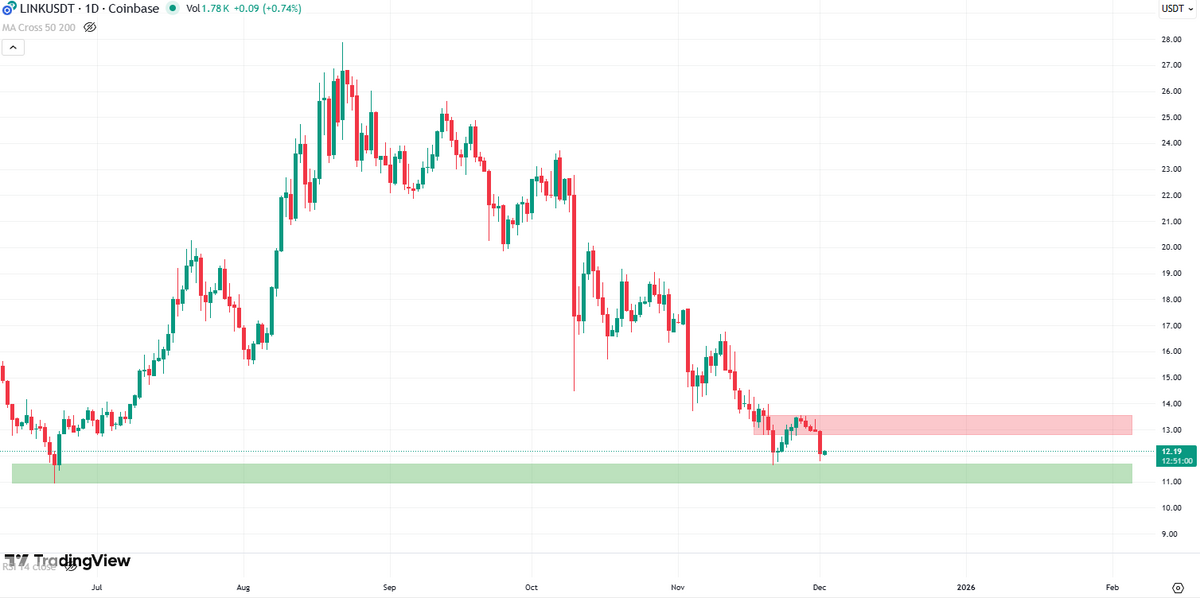
Chainlink ETF Set to Debut as LINK Slips Amid Market Weakness
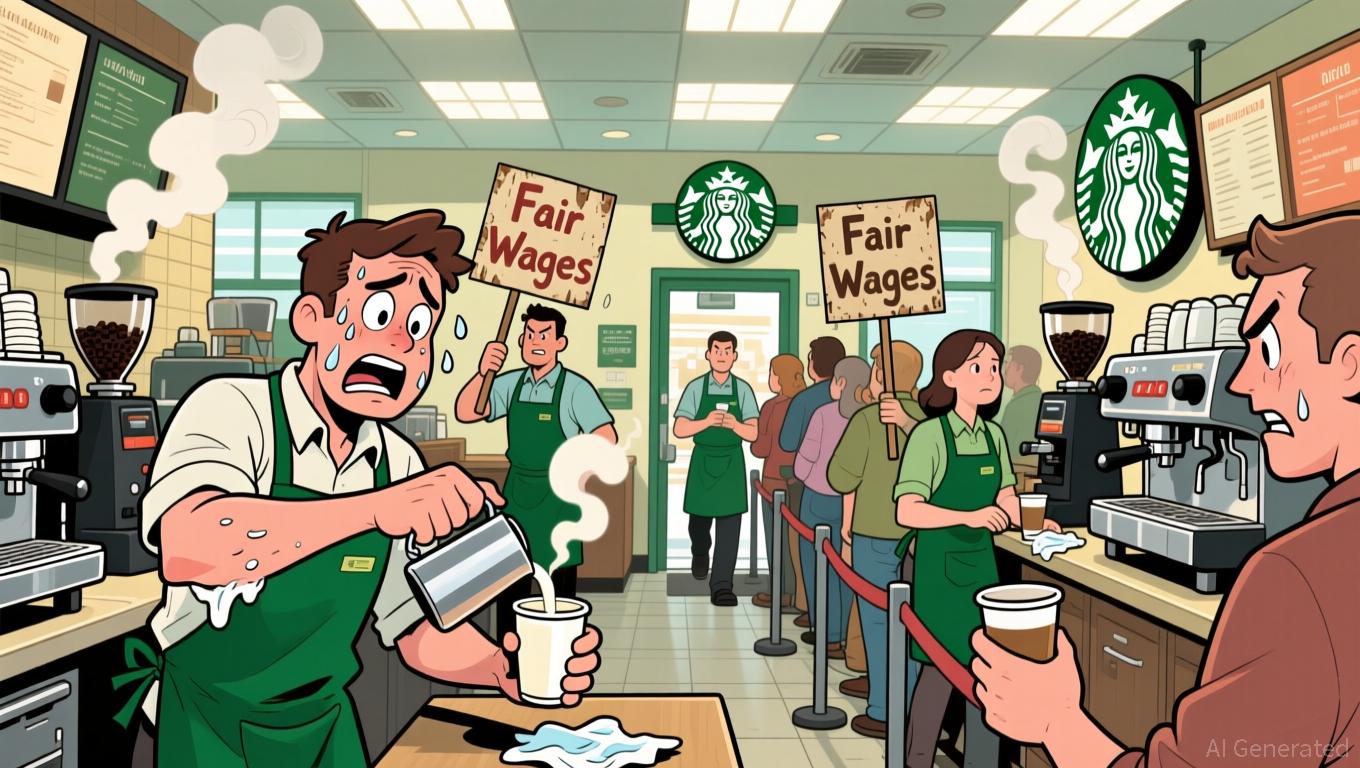
Striking baristas win $38.9 million in compensation, yet contract disputes continue
- Starbucks settles NYC Fair Workweek Law violations for $38.9M, including $35.5M restitution to 15,000+ workers. - Striking baristas demand collective bargaining amid ongoing labor disputes and unionization efforts at 550 stores. - Mayor-elect Mamdani and Sen. Sanders join protests, framing demands as moral issues against corporate resistance. - Settlement addresses 500,000 scheduling violations since 2021, with workers receiving $50/week compensation. - Starbucks defends labor law complexity but faces cr
Alphabet's AI-driven ecosystem accelerates flywheel momentum, driving shares up by 68% in 2025
- Alphabet's stock surged 68% in 2025, outperforming peers like Microsoft and Nvidia , driven by strong AI monetization and cloud growth. - Analysts raised price targets to $375-$335, citing Google Cloud's $15.2B Q3 revenue (34% YoY) and $155B cloud backlog growth. - The company's AI ecosystem spans Search, YouTube, and Workspace, generating premium subscriptions and ad yield through Gemini's 650M MAUs. - Projected cloud revenue could exceed estimates by $40B, but risks include regulatory scrutiny and comp

XRP News Today: Vanguard Changes Position on Crypto ETFs, Pointing to Market Maturity and Increased Demand
- Vanguard Group will enable crypto ETF trading on its platform from December 2, 2025, reversing years of opposition to digital assets. - The firm supports Bitcoin , Ethereum , XRP , and Solana ETFs but excludes memecoins, treating crypto as non-core assets like gold . - Market maturation, $25B+ ETF inflows, and regulatory compliance drive the shift, positioning Vanguard as the last major U.S. broker to adopt crypto ETFs. - The move reflects growing institutional confidence in regulated crypto structures a
Trending news
MoreCrypto prices
More





