
[English Long Tweet] Will the Fusaka upgrade usher in the endgame era for Ethereum?

Chainfeeds Guide:
Fusaka is by no means just another hard fork in a long list of upgrades, but rather the convergence point of all research achievements and incremental improvements Ethereum has made over the past decade.
Source:
Author:
Mars_DeFi
Opinion:
Mars_DeFi: The Fusaka upgrade of Ethereum is a significant milestone in Ethereum’s decade-long engineering evolution. It marks a shift from repeated patchwork and performance fine-tuning to a structural upgrade that comprehensively coordinates data, scalability, security, and the future roadmap. After Frontier, Homestead, and Byzantium laid the foundation for programmability and cryptographic capabilities, Ethereum endured congestion from surging demand between 2018 and 2020, which drove upgrades like Istanbul and Muir Glacier, gradually optimizing the protocol for Rollups. As DeFi and NFT booms led to a fee crisis, Ethereum overhauled its economic model with London in 2021 and completed the unprecedented Merge in 2022 with Paris, switching from PoW to PoS. Shapella and Dencun further unlocked staking liquidity and introduced Proto-Danksharding, significantly reducing L2 costs, while Pectra made smart accounts and improved user experience a reality. Fusaka follows these historical milestones and is inevitable because, as Rollup usage increases and node bandwidth approaches its limits, Ethereum will face centralization pressure and performance bottlenecks in the coming years unless it simultaneously breaks through in data availability, state structure, and execution capacity. Fusaka can be seen as the intersection of the Surge, Scourge, Verge, Purge, and Splurge phases in Ethereum’s engineering roadmap. It is not just about scaling parameters, but about fundamentally reshaping how Ethereum stores, verifies, orders, and maintains long-term decentralization. The core of Fusaka lies in PeerDAS, Blob scaling, Gas limit increases, and the introduction of Verkle Trees, combined with more predictable proposer scheduling, together forming the next stage of scaling infrastructure. PeerDAS changes how nodes verify data availability: in the Dencun era, nodes had to fully download all Rollup Blobs, and as L2 usage increases, this would cause bandwidth and storage costs to grow exponentially, ultimately forcing validator centralization. PeerDAS allows each node to randomly sample Blobs and collaborate with peer nodes for verification, ensuring data integrity through probabilistic security. This results in a 70%–80% reduction in bandwidth, bringing the cost of running a full node back to a more acceptable range and paving the way for large-scale Rollup data flows. On this basis, Ethereum plans to increase the number of Blobs per block from 6 to 10 and then to 14 in several short-cycle hard forks after Fusaka, resulting in over 60% growth in data capacity. As available space increases, Rollup congestion is expected to decrease, transaction fees may shrink further, and more users may migrate to L2; more transactions will also lead to more ETH being burned, creating a reinforcing cycle for Ethereum’s economy and usage. Raising the Gas Limit from 45 million to 60 million allows complex DeFi calls and NFT minting—high Gas operations—to fail less often due to block congestion, but also accelerates state growth. The introduction of Verkle Trees reduces state proofs from megabytes to tens of kilobytes, making light clients, mobile clients, and stateless nodes a reality, fundamentally alleviating the verification pressure on the execution layer as it scales. With the addition of a more predictable proposer reveal mechanism, coordination between Rollups and L1 becomes easier. Rollups based on Ethereum sequencing can coordinate pre-confirmations with proposers in a “based sequencing” mode, and more transparent proposer scheduling helps reduce manipulation incentives around ordering, taking MEV management and coordination to a new level. Looking back, Fusaka is not an isolated optimization, but the concentrated realization of a long-term research roadmap since Vitalik divided Ethereum’s path into Surge, Scourge, Verge, Purge, and Splurge. PeerDAS and Blob expansion drive Surge’s data scaling; deterministic proposers and Rollup sequencing strengthen Scourge’s MEV defense; Verkle Trees are the core goal of Verge; improvements to Gas and state structure pave the way for Purge; and the account abstraction and experience improvements brought by Pectra will be further leveraged after Fusaka. Strategically, Fusaka enables Ethereum to support much larger-scale Rollup traffic while maintaining decentralization, allowing usage to multiply without sacrificing node participation. Economically, it further ties ETH scarcity to its usage, making “transaction growth > supply growth” a more sustainable state. In terms of competition, Ethereum in the Fusaka era will be more clearly positioned as a global settlement and data availability layer, rather than directly competing as an execution-focused L1 with high TPS monolithic chains. It symbolizes the culmination of Ethereum’s decade-long engineering accumulation, giving it, for the first time, the practical scalability to support thousands of Rollups and the long-term capability to underpin future financial and computing systems. [Original text in English]
SourceDisclaimer: The content of this article solely reflects the author's opinion and does not represent the platform in any capacity. This article is not intended to serve as a reference for making investment decisions.
You may also like
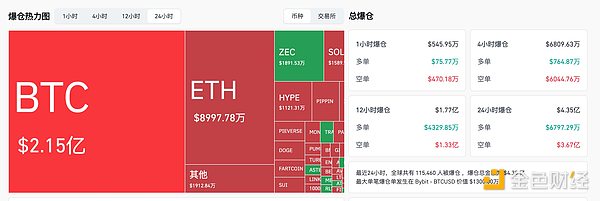
BTC returns to $93,000 after a brief dip to $83,000—what exactly happened?
Economic Truth: AI Drives Growth Alone, Cryptocurrency Becomes a Political Asset
The article analyzes the current economic situation, pointing out that AI is the main driver of GDP growth, while other sectors such as the labor market and household finances are in decline. Market dynamics have become detached from fundamentals, with AI capital expenditure being key to avoiding a recession. The widening wealth gap and energy supply are becoming bottlenecks for AI development. In the future, AI and cryptocurrencies may become the focus of policy adjustments. Summary generated by Mars AI This summary was generated by the Mars AI model, and its accuracy and completeness are still in the process of iterative improvement.
AI unicorn Anthropic accelerates IPO push, taking on OpenAI head-to-head?
Anthropic is accelerating its expansion into the capital markets, initiating collaboration with top law firms, which is seen as an important signal toward going public. The company's valuation is approaching 300 billions USD, and investors are betting it could go public before OpenAI.
Did top universities also get burned? Harvard invested $500 million heavily in bitcoin right before the major plunge
Harvard University's endowment fund significantly increased its holdings in bitcoin ETFs to nearly 500 million USD in the previous quarter. However, in the current quarter, the price of bitcoin subsequently dropped by more than 20%, exposing the fund to significant timing risk.

Trending news
MoreCrypto prices
More






