
Solana's New $11,6 Billion Staking Structure Targets Ethereum Liquidity

- Sanctum and Nansen Launch Liquid Staking Router on Solana
- Network seeks to consolidate pools and unify liquidity in LSTs
- Solana offers higher yields than Ethereum's L2s
Solana has taken a major step towards redefining its liquid staking ecosystem, with the launch of the new “universal staking router,” developed by Sanctum in partnership with Nansen. The system connects different liquid staking tokens (LSTs), such as mSOL, jitoSOL, and bSOL, into a standardized framework that promises to simplify the SOL staking process to a level comparable to a simple token swap.
With over $11,6 billion in total value locked (TVL) and $15,5 billion in stablecoins, Solana aims to address the fragmentation of its staking market, currently spread across platforms such as Jupiter, Kamino, Jito, and Sanctum itself. Each of these platforms operates partially siloed pools, hindering capital reuse and limiting liquidity efficiency.
Sanctum's new model transforms staking into a liquidity problem, not a governance one. It connects multiple pools under a unified standard, allowing users to create, swap, or migrate between LSTs through shared liquidity—without relying on specific protocol integrations. This interoperability should benefit Solana's DeFi, including DEXs like Raydium and Drift, lending markets, and derivatives protocols.
Nansen serves as the analytics partner for the partnership, providing dashboards that track validator performance, yields, and liquidity depth, allowing both users and institutions to monitor flows with the same transparency available in Ethereum staking markets.
The big challenge is whether this unification will be able to attract the liquidity that currently flows into Ethereum. Liquid staking on Solana offers yields of 5% to 8%, compared to 3% to 4% on ETH, along with near-zero costs and instant transactions. In comparison, Ethereum's Layer 2 (L2) still relies on complex bridges and high fees.
Currently, SOL's price hovers around $197, with a market cap of $107 billion, and staking accounts for nearly 20% of the network's TVL. If Sanctum's router can successfully consolidate flows between LSTs, Solana could establish a structural liquidity advantage that Ethereum's L2s will struggle to replicate, further boosting its role in the decentralized finance ecosystem.
Disclaimer: The content of this article solely reflects the author's opinion and does not represent the platform in any capacity. This article is not intended to serve as a reference for making investment decisions.
You may also like
AI unicorn Anthropic accelerates IPO push, taking on OpenAI head-to-head?
Anthropic is accelerating its expansion into the capital markets, initiating collaboration with top law firms, which is seen as an important signal toward going public. The company's valuation is approaching 300 billions USD, and investors are betting it could go public before OpenAI.
Did top universities also get burned? Harvard invested $500 million heavily in bitcoin right before the major plunge
Harvard University's endowment fund significantly increased its holdings in bitcoin ETFs to nearly 500 million USD in the previous quarter. However, in the current quarter, the price of bitcoin subsequently dropped by more than 20%, exposing the fund to significant timing risk.

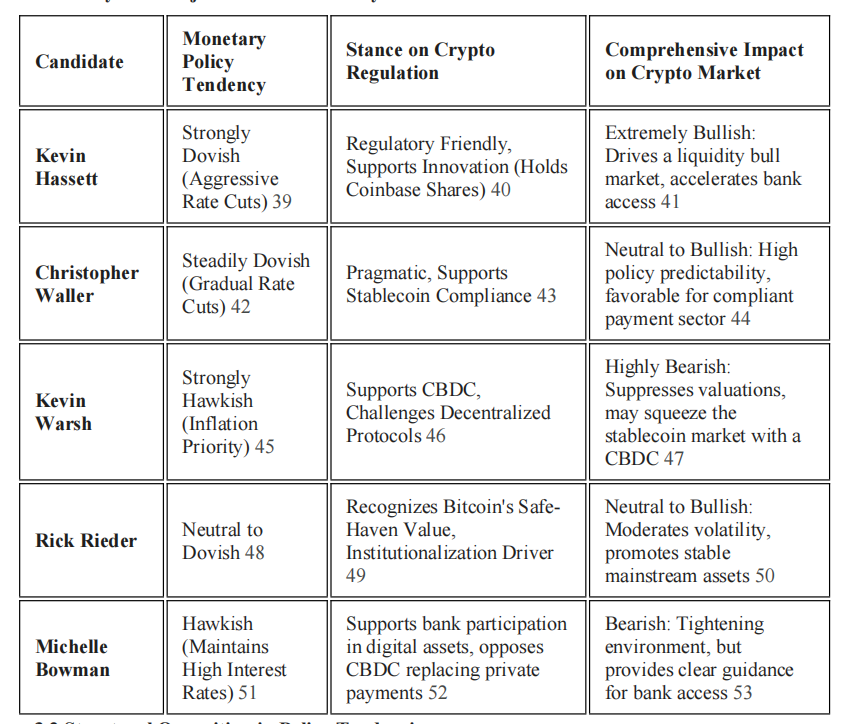
The Structural Impact of the Next Federal Reserve Chair on the Cryptocurrency Industry: Policy Shifts and Regulatory Reshaping
The change of the next Federal Reserve Chair is a decisive factor in reshaping the future macro environment of the cryptocurrency industry.
Tether: The Largest Yet Most Fragile Pillar in the Crypto World

Trending news
MoreCrypto prices
More






