
Vitalik Buterin says Fusaka upgrade's PeerDAS is key to Ethereum scaling

Quick Take Fusaka’s core feature PeerDAS lets Ethereum nodes verify and reconstruct blocks without storing full data, paving the way for greater scalability. Buterin said PeerDAS is key to both Layer 2 and future Layer 1 scaling, while blob counts will rise conservatively at first before increasing more aggressively.
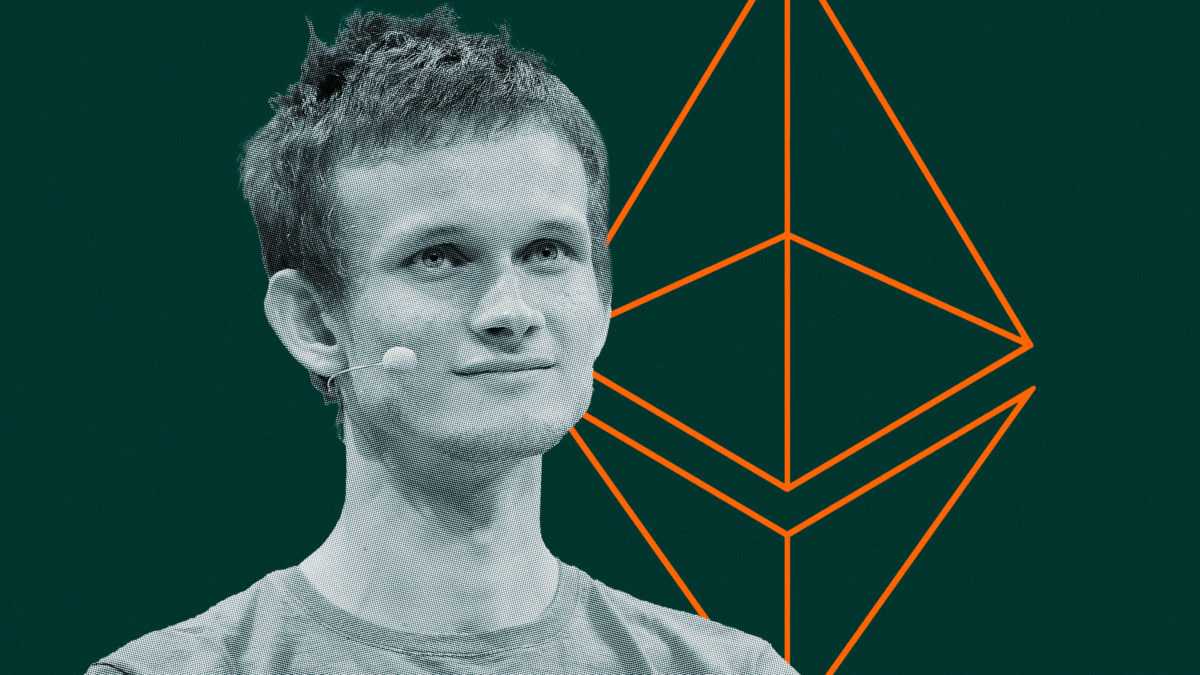
Ethereum co-founder Vitalik Buterin said the core feature of the blockchain's Fusaka upgrade, PeerDAS, is the key to scaling the network.
PeerDAS, short for Peer Data Availability Sampling, enables nodes to verify that block data exists without downloading or storing it all. Instead, nodes fetch smaller "chunks" of data, then use erasure coding to reconstruct the rest, Buterin explained in an X post . Erasure coding is a data protection technique that breaks data into pieces, adds redundant information, and distributes those pieces so the original data can be reconstructed even if some parts are missing.
Buterin described the approach as "pretty unprecedented" because it removes the need for any single node to hold the entire dataset. In the first version of PeerDAS, full data of a block is still needed in limited cases — when blocks are first broadcast and when partial blocks need reconstruction. Even then, he emphasized that only one honest actor is needed for that "untrusted" role to function, making the process resistant to large numbers of dishonest participants, with future improvements also allowing these two functions to be distributed.
Ethereum hits six blobs per block for first time
Buterin's comments came in response to a thread by Dragonfly Head of Data "hildobby," who noted Ethereum had just hit six blobs per block for the first time. Blobs are fixed-size packets of transaction data introduced in Ethereum's Dencun upgrade , designed to give rollups cheaper temporary storage than regular calldata. Each block has a limited "blobspace," and the number of blobs per block — the blob count — directly affects how much transaction data can be posted to Ethereum by scaling solutions.
According to hildobby, increased blob usage is being driven by activity from rollups like Base, World, Scroll, Soneium, and Linea, among others. Base and World alone are consuming most of the available blob space, with Layer 2s collectively paying around $200,000 per week in mainnet fees. Nevertheless, many blobs remain partially empty, and posting patterns are inconsistent, making blobspace harder to forecast, the analyst said.
Average blob count per block. Image: hildobby .
Buterin acknowledged these pressures and said blob counts will scale conservatively at first before ramping up more aggressively over time. This cautious rollout, he stressed, is deliberate — core developers want to thoroughly test the system before expanding capacity, despite working on it for years already. While blob counts determine how much data rollups can post per block, scaling them too quickly could put stress on the network. PeerDAS addresses this by letting nodes verify data availability through sampling rather than storing full blobs, which underpins the cautious approach to increasing blob counts over time.
Longer term, Buterin sees PeerDAS as key, not just for Layer 2 scaling, but for the Ethereum base layer as well. Once the gas limit rises high enough, he argued, even Layer 1 execution data could be moved into blobs. That would further reduce strain on nodes and unlock scaling headroom, allowing Ethereum to handle greater demand without sacrificing decentralization.
Last week, Ethereum developers tentatively set a date of Dec. 3 for Fusaka's launch on mainnet, pending successful testnets rollouts next month. The Ethereum Foundation also launched a four-week audit contest for Fusaka, offering up to $2 million in rewards for security researchers who uncover bugs before the hard fork reaches mainnet.
Disclaimer: The content of this article solely reflects the author's opinion and does not represent the platform in any capacity. This article is not intended to serve as a reference for making investment decisions.
You may also like
ECB shifts stance! Will interest rate hikes resume in 2026?
In the debate over "further tightening" versus "maintaining the status quo," divisions within the European Central Bank are becoming increasingly public. Investors have largely ruled out the possibility of the ECB cutting interest rates in 2026.
On the eve of Do Kwon's trial, $1.8 billion is being wagered on his sentence
Dead fundamentals, vibrant speculation.

Space Review|When the US Dollar Weakens and Liquidity Recovers: Cryptocurrency Market Trend Analysis and TRON Ecosystem Strategy
This article reviews the identification of macro turning points and the capital rotation patterns in the crypto market, and delves into specific allocation strategies and practical approaches for the TRON ecosystem during market cycles.
30-Year Wall Street Veteran: Lessons from Horse Racing, Poker, and Investment Legends That Inspired My Bitcoin Insights
What I focus on is not the price of bitcoin itself, but rather the position allocation of the group of people I am most familiar with—those who possess significant wealth, are well-educated, and have successfully achieved compounding returns on capital over decades.
Trending news
MoreCrypto prices
More





