
Shiba Inu Community Drives Burn Surge Amid Price Volatility
- Shiba Inu (SHIB) token burn rate surged 1,309% daily, with 2.94M tokens sent to dead wallets to reduce supply. - Despite 3.63% price decline, SHIB maintains $7.3B market cap as community-driven burns aim to boost scarcity. - Analysts speculate potential rally after weeks of consolidation, though volatility persists amid inconsistent weekly burn trends.
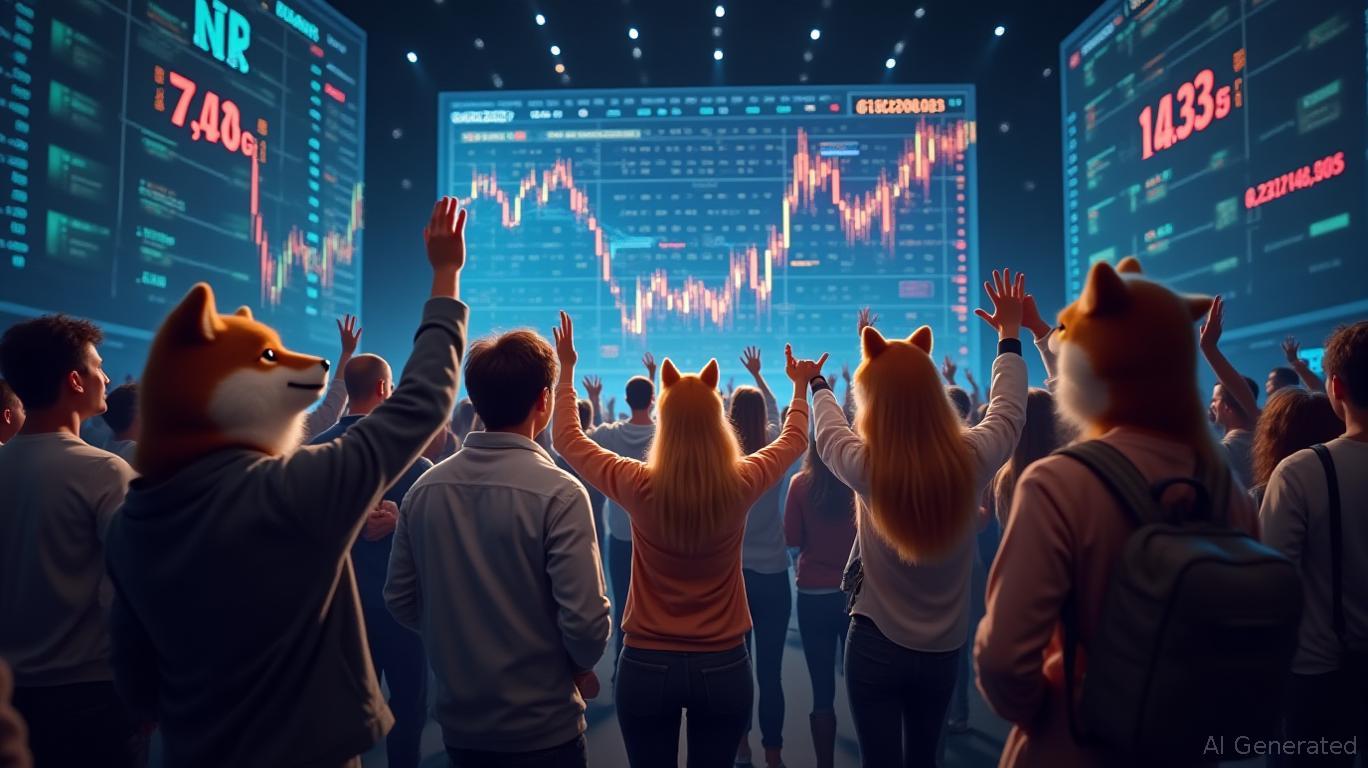
The Shiba Inu (SHIB) token has recently experienced a significant spike in its burn rate, with daily activity surging by 1,309% as the community continues to implement supply reduction strategies. Over the course of a single day, nearly 2,944,722 SHIB tokens were sent to dead wallets, a move aimed at decreasing the token’s circulating supply and enhancing scarcity [2]. This dramatic increase in burn activity, however, contrasts with a broader 81.45% decline in weekly burn figures, reflecting the inconsistent nature of market conditions and the challenges faced by token holders.
The burn mechanism has long been a key strategy for SHIB, with every burned token permanently removed from circulation. This approach is designed to counteract the asset’s low value and vast supply by reducing the number of tokens in play. As of the latest update, SHIB is trading at $0.00001208, a 3.63% decline in the last 24 hours, despite maintaining its position as the second-largest meme cryptocurrency by market capitalization. The development team has reiterated a message of resilience, stating, “We’re down, not done,” to reinforce confidence among investors during periods of volatility [2].
Price movements in SHIB have remained highly volatile, with a 12% drop on Monday followed by a partial recovery of 6.74%. The fluctuation has heightened concerns over market stability, particularly as the token struggles to maintain consistent upward momentum. Crypto trader Kamran Ashgar has speculated that SHIB may be entering a potential rally phase after weeks of consolidation, suggesting the burn activity could be a precursor to a broader price expansion [1].
Community participation in the burn process has been voluntary, with token holders sending SHIB to dead wallets based on market sentiment and confidence. The collective effort underscores the importance of community-driven initiatives in the governance and sustainability of meme tokens like SHIB. Despite the price decline, the token’s market cap remains at $7.3 billion, showing that investor base and engagement have not entirely waned [1].
Analysts continue to watch SHIB’s price behavior closely, particularly as the asset seeks to stabilize amid broader crypto market challenges. The token’s ability to recover from sharp declines will depend on sustained burn activity and broader market conditions. In the short term, the SHIB community appears focused on maintaining morale and confidence, while market watchers assess whether the current burn surge can translate into a more sustained price recovery.
Disclaimer: The content of this article solely reflects the author's opinion and does not represent the platform in any capacity. This article is not intended to serve as a reference for making investment decisions.
You may also like
Decoding VitaDAO: A Paradigm Revolution in Decentralized Science
Mars Morning News | ETH returns to $3,000, extreme fear sentiment has passed
The Federal Reserve's Beige Book shows little change in U.S. economic activity, with increasing divergence in the consumer market. JPMorgan predicts a Fed rate cut in December. Nasdaq has applied to increase the position limit for BlackRock's Bitcoin ETF options. ETH has returned to $3,000, signaling a recovery in market sentiment. Hyperliquid has sparked controversy due to a token symbol change. Binance faces a $1 billion terrorism-related lawsuit. Securitize has received EU approval to operate a tokenization trading system. The Tether CEO responded to S&P's credit rating downgrade. Large Bitcoin holders are increasing deposits to exchanges. Summary generated by Mars AI. The accuracy and completeness of this summary are still being iteratively improved by the Mars AI model.

The central bank sets a major tone on stablecoins for the first time—where will the market go next?
The People's Bank of China held a meeting to crack down on virtual currency trading and speculation, clearly defining stablecoins as a form of virtual currency with risks of illegal financial activities, and emphasized the continued prohibition of all virtual currency-related businesses.
Trending news
MoreCrypto prices
More





