Investing in STEM and Digital Skills: Shaping the Future of Higher Education and Workforce Integration
Transforming EdTech: Meeting the Demand for STEM and Digital Skills
The education technology sector is experiencing a dramatic transformation as the need for expertise in STEM fields and digital literacy becomes increasingly urgent. With industries placing greater emphasis on artificial intelligence, cybersecurity, and computer science, universities and EdTech companies are reshaping their programs to better prepare students for the evolving job market. This shift is creating significant opportunities for investors, as forecasts indicate the EdTech and digital literacy market will surge from $122.4 billion in 2024 to $790 billion by 2034, representing an impressive annual growth rate of 20.5%.
AI, Cybersecurity, and Computer Science: Shaping the Future of Higher Education
The rising need for professionals skilled in AI and cybersecurity has led to a notable increase in enrollment in these disciplines, outpacing more traditional fields such as the humanities. Universities like the University of Texas at San Antonio and Northwood University are responding with accelerated degree programs in cybersecurity, including Northwood’s three-year Bachelor of Applied Science in Cybersecurity, to address the shortage of qualified experts.
Cybersecurity, in particular, has become a foundational element in workforce development. In the United States, associate-level cybersecurity enrollments grew by 26% during the 2023/2024 academic year, while undergraduate certificate programs saw an 18% rise, according to industry statistics. Major initiatives, such as Google’s $25 million investment in university cybersecurity clinics and free entry-level training from the International Information System Security Certification Consortium, highlight the sector’s growing importance.
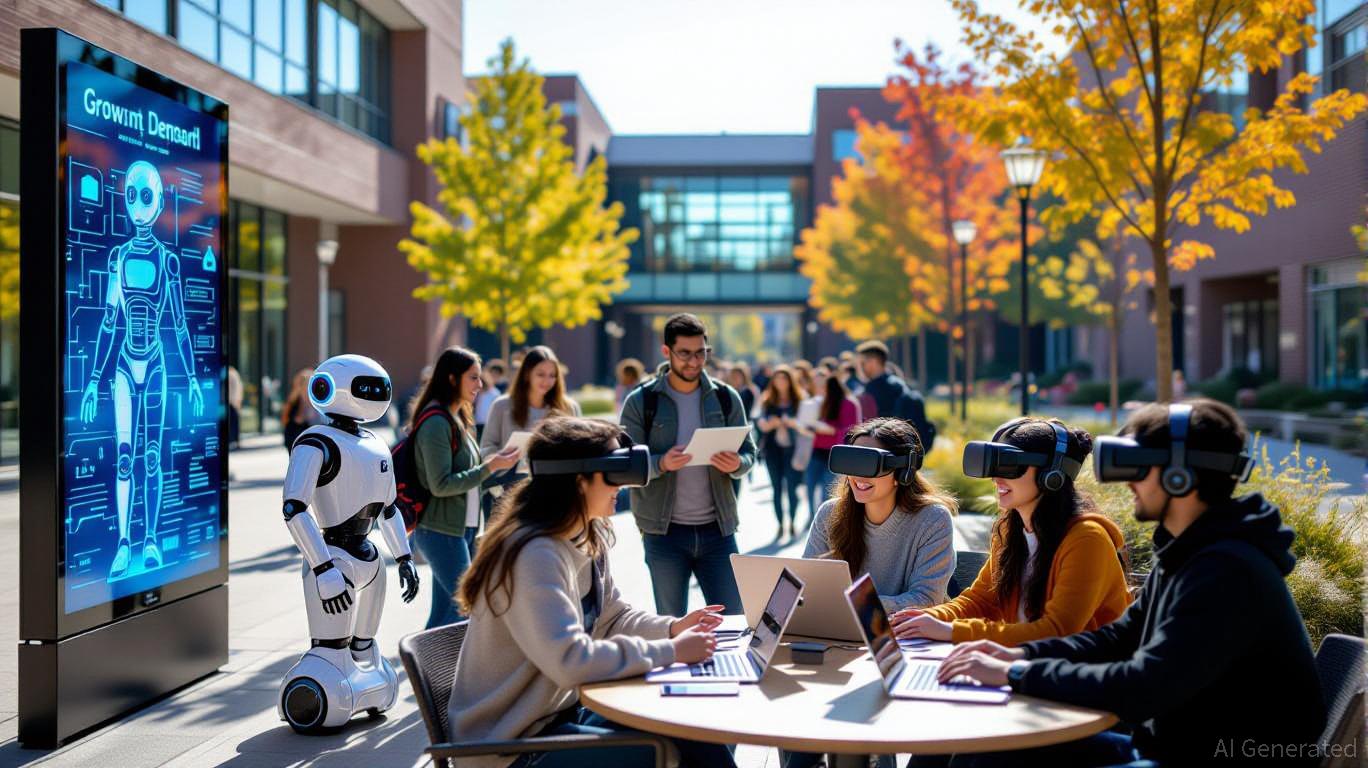
Artificial intelligence is also taking center stage in educational priorities. Recent surveys show that state education leaders now consider AI the top focus for EdTech initiatives, even ahead of cybersecurity. Schools are weaving AI into their curricula, administrative processes, and teacher development programs, as demonstrated by efforts in Virginia and North Carolina to integrate AI standards across K-12 and higher education. Meanwhile, platforms like Coursera and Udacity are utilizing machine learning to tailor educational experiences, boosting student engagement and achievement.
Key Players and Investment Opportunities in EdTech
The rapid expansion of EdTech is being driven by organizations that emphasize scalability, flexibility, and alignment with workforce needs. Coursera, for example, collaborates with over 300 universities to deliver AI-enhanced personalized learning, while Udacity’s Nanodegree programs in AI and data science are tailored to meet specific industry requirements. Carnegie Learning stands out by merging AI with cognitive science to develop customized STEM curricula, illustrating how technology can elevate traditional education models.
Cybersecurity within EdTech represents a particularly promising investment area. The global market for cybersecurity in education is expected to soar from $36 billion in 2024 to $243 billion by 2034, with a compound annual growth rate of 21.2%. North America leads this space, with the U.S. alone accounting for $12.31 billion in 2024. Innovative startups like IONI and Dreambox Learning are disrupting the market by offering AI-powered adaptive assessments and personalized learning solutions.
When evaluating investment prospects, it’s important to consider the sustainability of these platforms. The United States is home to 138 of the world’s top 350 EdTech companies, underscoring its leadership in innovation and market adoption. However, challenges such as fluctuating pricing models and inconsistent digital infrastructure in developing regions persist. Despite these obstacles, the integration of AI, augmented and virtual reality, and gamification into STEM education is fostering a dynamic environment for ongoing growth.
Bridging Education and Industry: Preparing for Tomorrow’s Workforce
Ensuring that educational programs are closely aligned with industry requirements is essential for long-term investment success. The World Economic Forum’s 2025 Future of Jobs Report highlights Information Security Analysts as one of the fastest-growing professions, with network and cybersecurity skills ranking as the second most rapidly expanding skill set. Similarly, roles in AI and computer science are growing swiftly, propelled by advances in automation, data analytics, and regulatory changes.
To keep pace, educational institutions must adapt their curricula to focus on practical, job-ready skills. More than half of organizations now prioritize skill verification over traditional hiring practices, emphasizing the importance of hands-on, competency-based learning. Universities and EdTech platforms that collaborate with industry leaders—such as Udacity’s partnerships with technology companies to provide project-based training and certifications—are better positioned to succeed in this evolving landscape.
Looking Ahead: The Future of EdTech Investment
The intersection of STEM education, digital literacy, and workforce needs is creating a vibrant environment for investment. As courses in AI, cybersecurity, and computer science become increasingly prominent, institutions and platforms that harness advanced technologies to deliver personalized and scalable solutions are set to lead the market. With the EdTech and digital literacy sector projected to reach $790 billion by 2034 and cybersecurity in education growing at a 21.2% annual rate, investors who align with these trends stand to benefit from a transformative industry. The key to success lies in supporting platforms and programs that not only address current workforce demands but also anticipate the skills essential for the digital economy of the future.





